4th February 2026, Gaurav Kumar Singh
It usually starts innocently enough.
You wake up, glance at your wrist, and your smartwatch tells you that you slept “poorly.” You feel fine, but now the seed is planted. Was your sleep really bad? Are you tired and just don’t realize it yet? By lunchtime, you’re yawning—not because you’re exhausted, but because your watch said you should be.
This quiet influence is exactly why smartwatches deserve appreciation—and a healthy dose of skepticism.
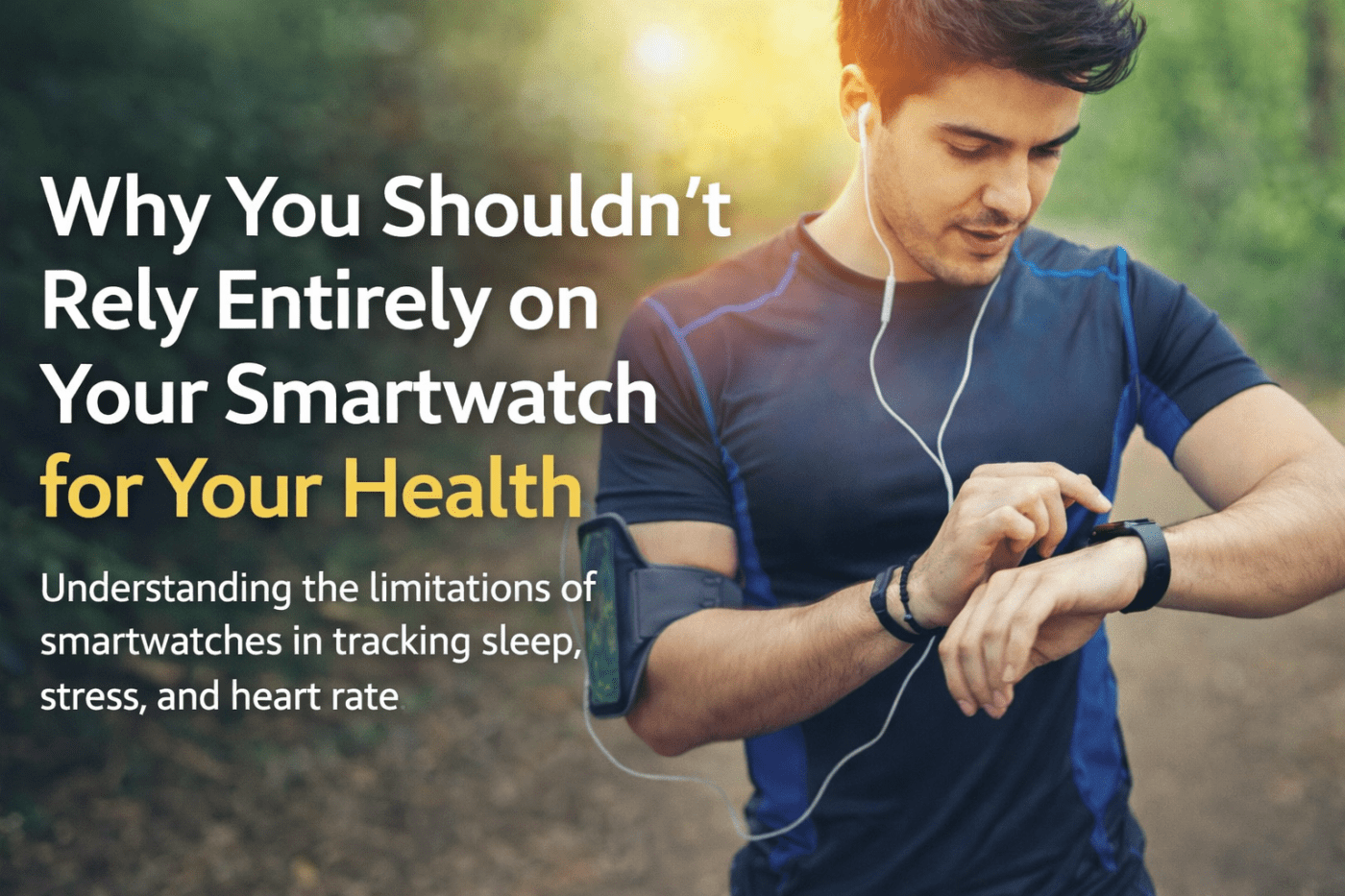
Smartwatches are excellent tools for spotting patterns and building awareness, but their health data—especially for sleep, stress, and energy—is often imprecise and should never replace medical judgment or how your body actually feels.
Now let’s unpack why.
The Rise of the Wrist-Based Health Revolution
At the turn of the century, wearable devices were niche gadgets used mostly by serious runners. Fast-forward to today, and smartwatches track everything from steps and heart rate to sleep cycles, stress levels, oxygen saturation, and even menstrual cycles.
Think of smartwatches as that enthusiastic friend who keeps notes about your daily routine. Helpful? Yes. Perfect? Not even close.
The smartwatches have now shifted from novelty items to everyday health companions. But with more features comes a bigger problem: data overload paired with questionable accuracy.
When Numbers Look Scientific but Aren’t?
In a recent study conducted by researchers at Leiden University in the Netherlands, the researchers discovered that smartwatch data—particularly related to stress and energy levels—often did not match what users actually reported feeling.
Imagine a thermometer that looks precise but is slightly off every time you use it. You wouldn’t throw it away, but you wouldn’t bet your health on it either.
Smartwatches rely heavily on indirect measurements. Stress, for example, isn’t measured directly. Instead, it’s inferred from heart rate variability, movement patterns, and sometimes skin temperature. These proxies can be influenced by caffeine, dehydration, emotional excitement, illness, or even a tense movie scene.
So when your watch flashes a “high stress” alert, it might not be stress at all—it could simply be your body reacting to something completely normal.
Sleep Tracking: The Most Misunderstood Feature
Sleep tracking is one of the most popular smartwatch features—and one of the most misleading.
The study points out that while people trust sleep scores deeply, there is a weak correlations between smartwatch-recorded sleep data and actual physiological measurements. In simple terms, your watch is making an educated guess.
Picture this: you’re lying still in bed, scrolling through your phone. To your smartwatch, you’re asleep. Or you wake briefly at night, fully aware, but because you didn’t move much, your watch logs you as sound asleep.
Over time, this can create anxiety around sleep rather than improving it. Many users begin chasing “perfect sleep scores,” even when they feel refreshed and alert the next morning.
Ironically, worrying about sleep quality is one of the best ways to ruin it.
What Smartwatches Actually Do Well?
This isn’t an anti-smartwatch rant. In fact, there are many areas where wearables shine.
Heart rate tracking at rest is generally accurate. Distance tracking for walking, running, and cycling is also reliable. Large-scale studies, such as those involving hundreds of thousands of users, have shown that smartwatches can successfully flag irregular heart rhythms that warrant medical attention.
Think of a smartwatch as an early warning system, not a diagnostic tool. It can nudge you to ask better questions, but it cannot give you definitive answers.
Doctors themselves often appreciate smartwatch data when it’s used correctly—as supporting information, not final proof.
The Real Problem: Interpreting the Data
One of the most striking points of the study is this: most people don’t actually know what to do with the data they collect.
A drop in step count. A restless night. A spike in heart rate. Without context, these numbers are just noise.
Many users notice trends but don’t act meaningfully on them. Others panic unnecessarily. Some ignore the data altogether. The result is a strange paradox: more information, but less clarity.
Good health doesn’t come from tracking every metric obsessively. It comes from fundamentals—balanced nutrition, regular movement, quality sleep, stress management, and timely medical check-ups.
Smartwatches can support these habits, but they cannot replace them.
Why Blind Trust Can Backfire?
Relying entirely on a smartwatch can subtly disconnect you from your own body. You might ignore genuine fatigue because your watch says you slept “well,” or worry excessively because your stress score looks high on an otherwise good day.
Health is deeply personal and contextual. No algorithm—no matter how advanced—can fully account for your emotions, environment, or lived experience.
As per the experts smartwatch data should be used as gentle feedback, not as a strict judge of your well-being.
The Smart Way to Use a Smartwatch
The future of wearable technology is promising. Sensors are improving, algorithms are getting smarter, and integration with healthcare systems is growing. But even as technology advances, one truth will remain unchanged: your body is not a spreadsheet.
Use your smartwatch to notice patterns, not to define your health. Let it prompt conversations with doctors, not replace them. And most importantly, trust how you feel—not just what lights up on your wrist.
Final Thoughts
Smartwatches are powerful tools when used wisely and dangerous distractions when trusted blindly. They work best as companions, not commanders.
So the next time your watch tells you something feels “off,” pause for a moment. Check in with yourself. Your body has been sending signals far longer than any device ever will.
If you found this article helpful, share it with someone who checks their smartwatch before their mood. And tell me—has your smartwatch ever made you doubt how you actually felt?

If you found this article valuable, please don’t forget to Like and Subscribe to my blog for more expert insights and updates.

 THE MIND UPGRADE
Leave a comment