2nd February 2026, Gaurav Kumar Singh
Healthcare inflation in India is rising not just because treatment is improving, but because hospital bills are increasingly packed with exclusions, add-ons, and loosely regulated charges that quietly push costs higher.
A Bill That Feels Heavier Than the Illness
It usually starts the same way.
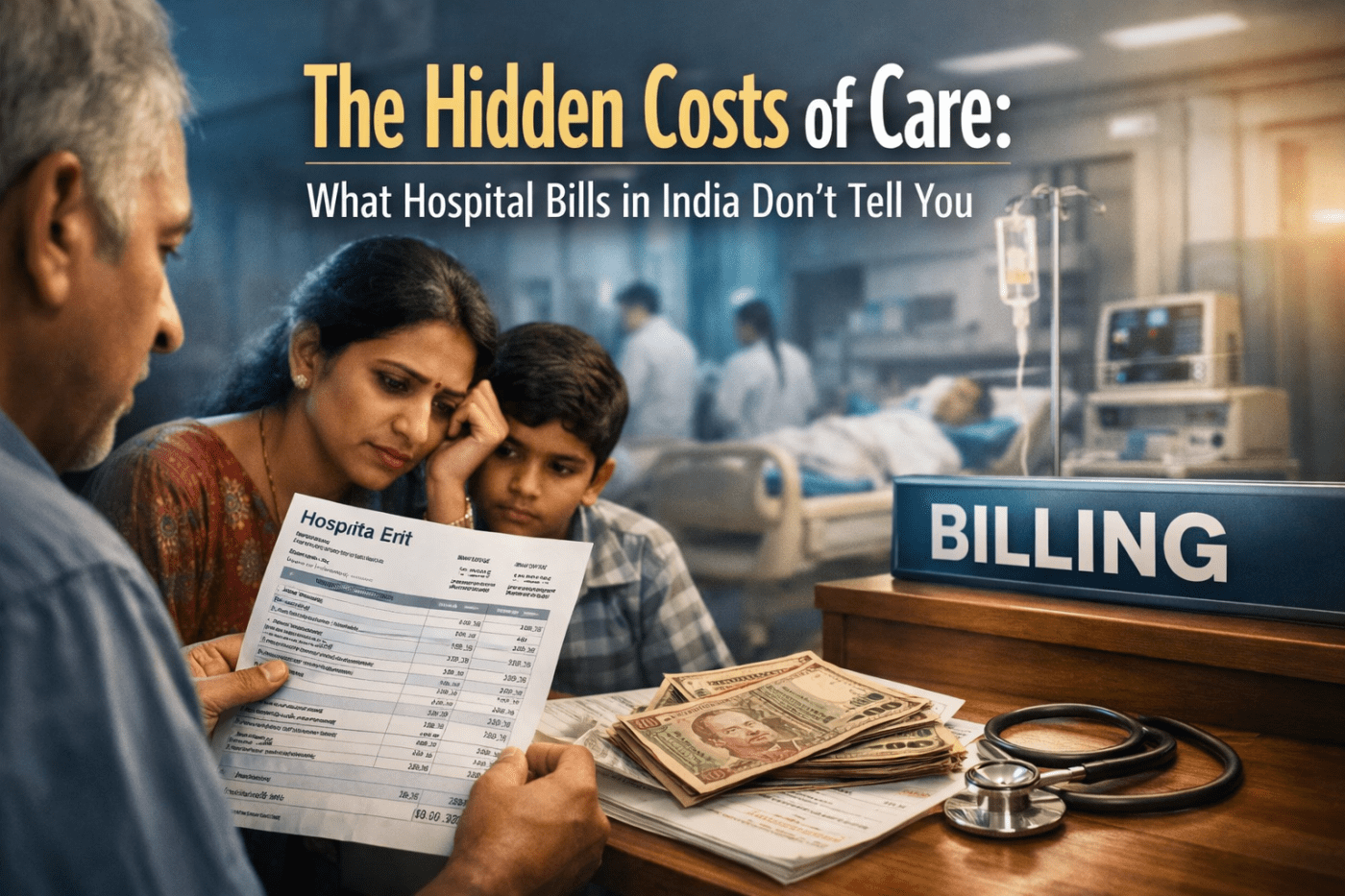
A loved one is admitted to the hospital. The focus is on recovery, not receipts. Days later, as discharge papers arrive, so does the invoice—and suddenly the relief of healing is replaced by disbelief. The final amount is far higher than expected, even higher than what insurance promised to cover.
You scan the pages. Room charges. Procedure fees. Consumables. Monitoring charges. Service costs. Taxes. Somewhere between unfamiliar terminology and fine print, the total balloons. You might be surprised to learn that this experience isn’t an exception in India—it’s becoming the norm.
This is where The Hidden Costs of Care quietly reveal themselves.
The Illusion of the “Base Cost” in Indian Healthcare
Hospitals often present treatment as having a base price. A surgery costs “around this much.” A day in a room costs “approximately that much.” Think of it like booking a flight that looks cheap until you add baggage, seat selection, food, and convenience fees. By the time you reach checkout, the price has doubled.
In hospitals, that base cost is rarely the final cost. The quoted surgery fee may not include surgeon visits, specialist consultations, anesthesia variations, or post-operative monitoring. Each of these is billed separately, often without clear disclosure upfront.
The result is a system where patients consent to treatment without fully understanding the financial journey they are stepping into.
Exclusions: The Silent Shock After Insurance Approval
Health insurance is meant to soften the blow. Yet, many families discover its limits only after the bill arrives.
Exclusions are where reality bites. Items considered “non-medical,” such as gloves, syringes, masks, disinfectants, or even certain diagnostic tests, are often excluded from coverage. Think of insurance like an umbrella that looks sturdy—until it starts raining from the sides.
Even when insurers approve a claim, they may cap room rents. Choose a slightly better room, and suddenly every associated cost—from doctor fees to procedure charges—is proportionately reduced by the insurer and increased for you. What felt like a small comfort choice becomes a financial penalty.
These exclusions don’t just strain wallets; they create distrust and confusion, feeding the sense that healthcare is becoming unpredictably expensive.
Add-Ons That Add Up Faster Than You Expect
Add-ons in hospitals are rarely malicious, but they are powerful. A monitoring charge here, a specialist visit there, premium consumables instead of standard ones—it all sounds reasonable in isolation.
Now imagine ordering a simple coffee and being charged separately for the cup, the sugar, the stirring spoon, and the chair you sat on. In many Indian hospitals, that’s essentially how billing works.
Advanced devices, disposable tools, branded implants, and upgraded services are often added without meaningful discussion. Patients rarely refuse because, in a medical setting, questioning a recommendation feels risky. Over time, these small add-ons quietly inflate overall healthcare costs across the system.
Loosely Regulated Fees and the Grey Zones of Billing
Unlike medicines, which have some price controls, many hospital services sit in a regulatory grey zone. Consultation fees, procedure charges, and service costs can vary dramatically between hospitals—and even within the same city.
Think of it like hailing a taxi without a meter. You only find out what the ride costs once you’ve reached the destination.
The lack of standardized pricing allows wide discretion. Hospitals justify this through infrastructure costs, expertise, and technology investments. While some variation is fair, the absence of transparent benchmarks makes it hard for patients to judge what is reasonable and what is excessive.
This opacity fuels healthcare inflation because prices rise quietly, without public scrutiny.
How These Hidden Costs Fuel Healthcare Inflation in India?
When exclusions, add-ons, and flexible fees become normal, they don’t just affect individual families—they reshape the entire healthcare economy.
Hospitals factor these revenue streams into future pricing. Insurers respond by raising premiums. Patients, expecting higher costs, delay care or opt for loans. It’s a cycle where everyone pays more, even if outcomes don’t improve proportionately.
Over time, healthcare inflation outpaces general inflation, turning medical care into one of the biggest financial anxieties for Indian households.
What Patients and Families Can Do—Right Now
Awareness is your first line of defense. Asking for detailed estimates, clarifying exclusions before admission, and requesting itemized bills can feel uncomfortable—but they matter. Think of it as reading the map before entering a maze.
Comparing hospitals, understanding insurance sub-limits, and keeping written communication may not eliminate hidden costs, but they can reduce unpleasant surprises.
At a broader level, public pressure for transparency and standardization is essential. Healthcare works best when trust flows both ways.
The Road Ahead: Transparency or Trouble
India’s healthcare system is full of capable professionals and world-class outcomes. Yet, without clearer billing practices and tighter regulation, The Hidden Costs of Care will continue to erode confidence and affordability.
The future of healthcare shouldn’t feel like decoding a puzzle after discharge. It should be about healing first, finances second—and clarity always.
If this story resonated with you, share it with someone who’s navigating medical decisions right now. And if you’ve faced a surprising hospital bill, your experience might help others—drop a comment and let’s talk about it.

If you found this article valuable, please don’t forget to Like and Subscribe to my blog for more expert insights and updates.

 THE MIND UPGRADE
Leave a comment