9th March 2026, Gaurav Kumar Singh
Imagine a situation no family ever wants to face.
A young couple with a small child suddenly meets with an accident. Relatives step forward to help, and the grandparents begin caring for the child. But then practical questions arise.
Who can sign school forms?
Who can access the child’s bank account or insurance benefits?
Who can make medical decisions if the child falls sick?
Emotionally, the family knows who should take care of the child. But legally, things are not always that simple.
This is where a Letter of Guardianship in India becomes extremely important.
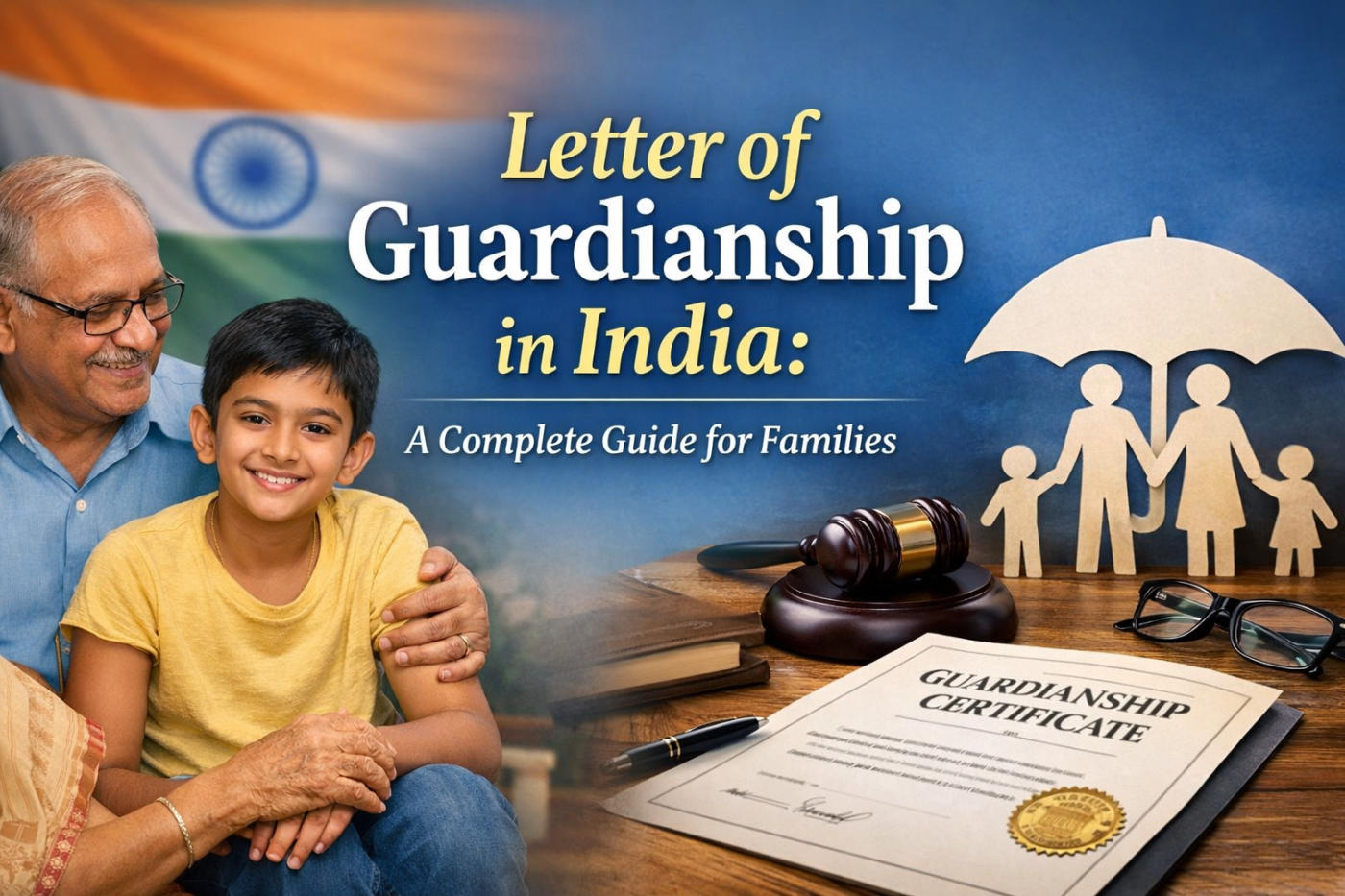
In this guide, we will walk through everything families need to know—from what guardianship means, when it is required, and how to apply for a guardianship certificate step-by-step in India, including practical situations many Indian families face.
What Is a Letter of Guardianship in India?
In simple terms, a Letter of Guardianship is a legal authorization that allows an adult to take responsibility for a minor child.
This guardian may handle matters such as:
* Education
* Healthcare decisions
* Financial matters
* Legal representation
Under Indian law, this concept is primarily governed by the Guardian and Wards Act, 1890.
Think of it like this.
If a child’s life is a journey, parents are naturally the drivers. But if something happens to them—or they are unable to manage certain responsibilities—the court appoints another trusted adult to take the steering wheel legally.
Without this legal recognition, even close relatives may face serious difficulties managing the child’s affairs.
When Is Guardianship Required?
Most families never think about guardianship until a situation forces them to.
Let’s explore some real-life scenarios.
1. When Both Parents Pass Away
This is the most common situation.
If both parents die unexpectedly, the child may live with:
* Grandparents
* Uncles or aunts
* Elder siblings
But legally, someone must be appointed as the guardian to handle the child’s financial, educational, and legal matters.
For example:
A grandfather may be raising his grandson, but the school might still ask:
“Are you the legal guardian?”
Without official guardianship, many institutions cannot legally recognize the caretaker.
2. When Parents Are Alive but Unable to Care for the Child
Sometimes parents may be:
* Working abroad
* Seriously ill
* Facing legal issues
* Living separately
In such cases, parents may assign guardianship to a trusted relative.
Think of it like temporarily handing over responsibility to someone you trust completely.
For instance:
A couple moving abroad for work may authorize the child’s uncle to manage school admissions and medical decisions.
3. When the Child Has Property or Financial Assets
Another situation arises when a minor inherits property.
Imagine a child receiving:
* Insurance money
* Property inheritance
* Bank deposits
* Compensation funds
Since minors cannot legally manage assets, a court-appointed guardian must handle the finances responsibly.
Without guardianship, even accessing the child’s own inheritance may become impossible.
Types of Guardianship in India
Indian law recognizes different forms of guardianship.
Understanding these is important before applying.
Natural Guardian
Typically, the father is considered the natural guardian, followed by the mother.
However, courts now increasingly recognize the mother as an equal guardian.
Testamentary Guardian
This is when parents appoint a guardian through a will.
For example, parents may write in their will:
“If anything happens to us, our daughter will be under the guardianship of my brother.”
This helps avoid disputes later.
Court-Appointed Guardian
If no guardian is designated, the court appoints one based on the child’s best interests.
The court evaluates factors like:
* Emotional bond with the child
* Financial stability
* Living conditions
* Character of the applicant
In the end, the court’s priority is simple:
What is best for the child?
How to Apply for Letter of Guardianship in India (Step-by-Step)
Let’s walk through the actual process.
Think of it like applying for legal authority to care for a child.
Step 1: File a Petition in District Court
The first step is filing a guardianship petition under the Guardian and Wards Act.
This is usually filed in the District Court where the child lives.
The petition includes:
* Child’s details
* Relationship with the applicant
* Reason for guardianship
* Child’s assets (if any)
Step 2: Attach Supporting Documents
The court requires several documents.
Common documents include:
* Birth certificate of the child
* Death certificates of parents (if applicable)
* Identity proof of applicant
* Address proof
* Affidavit explaining guardianship need
* Property or asset documents (if relevant)
These documents help the court verify the facts.
Step 3: Court Notice and Hearing
Once the petition is filed, the court may issue notices to:
* Close relatives
* Interested parties
This ensures transparency.
If no one objects, the process moves smoothly.
If someone challenges the guardianship, the court carefully examines the case.
Step 4: Verification by Court
Sometimes the court may request:
* Local verification
* Statements from relatives
* Interaction with the child
Imagine the judge trying to answer one simple question:
“Will this guardian truly care for the child?”
Step 5: Court Issues Guardianship Certificate
If the court is satisfied, it issues the Guardianship Certificate.
This document legally confirms that the person is responsible for the minor.
From that moment, the guardian can:
* Sign school documents
* Manage financial matters
* Represent the child legally
Special Situation: When Grandparents Care for the Child
This situation is very common in India.
Suppose both parents pass away and the grandparents take care of the child.
Emotionally, everyone accepts them as guardians.
But legally, institutions often require formal proof.
However, some grandparents face challenges:
* Very old age
* Limited education
* Unfamiliarity with legal procedures
In such cases, a trusted relative or lawyer can assist them in filing the petition.
The court generally supports grandparents because they often have the strongest emotional bond with the child.
Can Parents Assign Guardianship While Alive?
Yes.
Parents can legally appoint a guardian through:
* A notarized guardianship letter
* A registered declaration
* A will
However, if the guardianship involves financial assets or legal authority, courts may still require formal guardianship approval.
Think of it like giving someone permission—but the court confirming that permission for legal purposes.
Why Every Family Should Think About Guardianship?
Most people associate guardianship with tragic situations.
But in reality, it is also a responsible form of family planning.
Just like parents buy life insurance to protect their children financially, designating a guardian protects them legally and emotionally.
Imagine the peace of mind knowing that if something unexpected happens, your child’s future is already secure.
No confusion.
No legal battles.
No uncertainty.
Just a trusted person ready to step in.
Final Thoughts
Children rely on adults not just for love and care, but also for protection under the law.
A Letter of Guardianship in India ensures that if parents are unable to care for a child, someone responsible can legally step in without delay.
Whether you are:
* A parent planning for the future
* A grandparent caring for a grandchild
* A relative helping a minor after family loss
Understanding guardianship laws can make a huge difference.
Because when it comes to children, clarity today prevents complications tomorrow.
If this guide helped you understand guardianship in India, consider sharing it with friends and family who may benefit from this knowledge. You may also leave a comment with your questions or experiences, and we can explore those topics in future guides.

If you found this article valuable, please don’t forget to Like and Subscribe to my blog for more expert insights and updates.

 THE MIND UPGRADE
Leave a comment