5th February 2026, Gaurav Kumar Singh
A few months ago, whenever you walked past a jewellery shop, you must have seen gold prices flashing on the digital board like a fever thermometer—rising every week. Neighbours were talking about buying gold coins. WhatsApp forwards screamed, “Gold will touch new lifetime highs!”
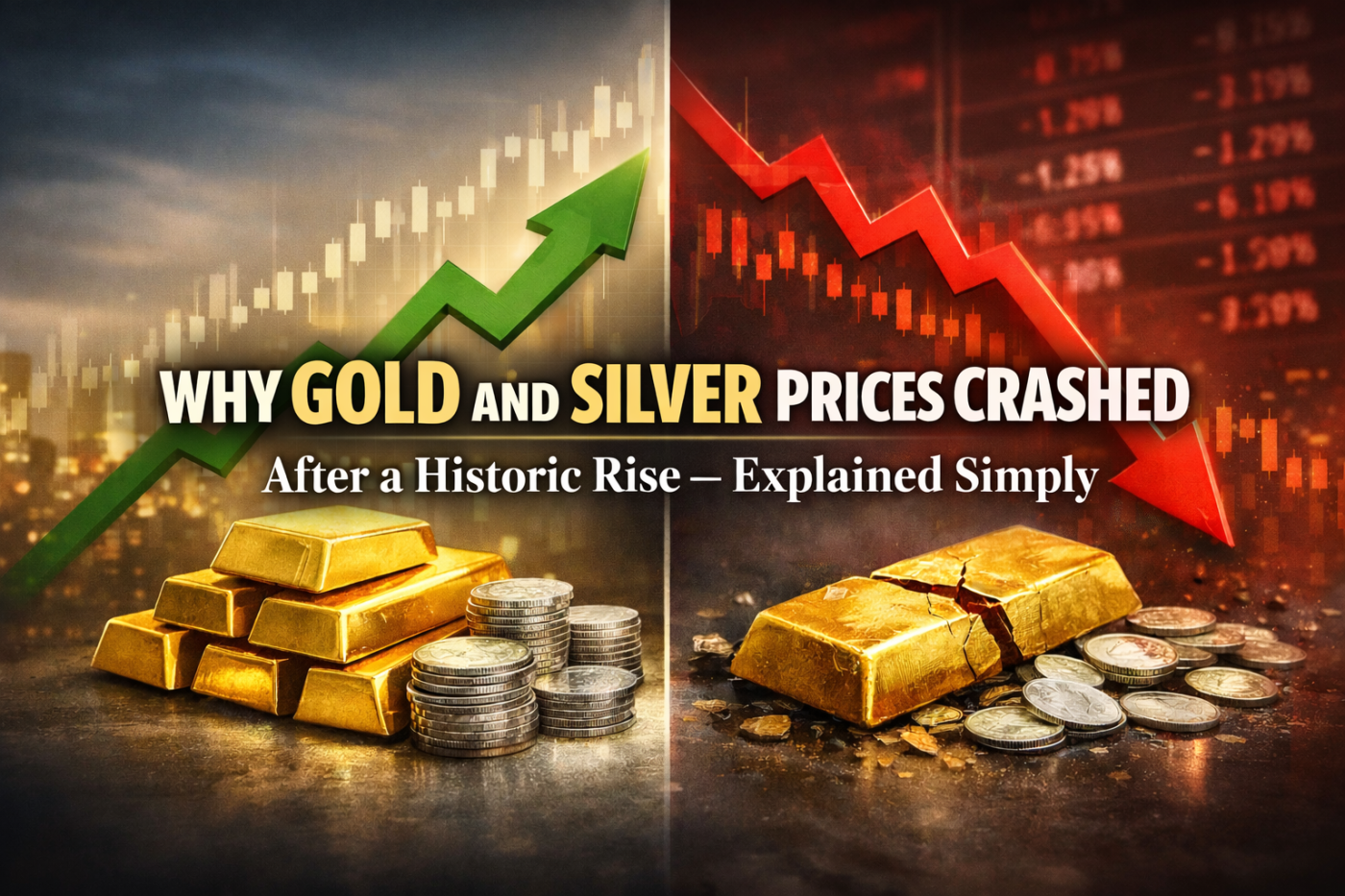
And then, suddenly, the mood changes. Headlines say “Gold crashes”, “Silver tumbles sharply”, and the same people are now confused, even worried.
If you’re a common person—not a trader, not a stock-market junkie—this whole rise and fall can feel mysterious, even unfair. So let’s slow it down, remove the jargon, and understand what really happened, why it happened, and what it means for you.
A Quick, Clear Answer First (For Busy Readers)
Gold and silver prices rose sharply because people across the world were scared—of inflation, wars, global debt, and economic slowdown. When fear rises, people rush to gold and silver. Prices went up too fast, too soon.
The fall happened when fears cooled slightly, interest rates stayed high, and big investors started booking profits. Prices didn’t collapse because gold became useless; they fell because markets moved ahead of reality.
For common people, this fall is not a disaster. In fact, it can be an opportunity—if you understand how to look at gold and silver calmly, not emotionally.
Now let’s unpack the story properly.
Why Gold and Silver Rose So Sharply in the First Place?
Think of gold and silver like umbrellas.
You don’t need them every day, but the moment dark clouds gather, everyone wants one—at the same time.
Fear Was the Real Fuel
Over the past year, several worries piled up together. Inflation stayed stubbornly high in many countries, meaning everyday things like food, fuel, and rent kept getting expensive. Global interest rates rose rapidly as central banks, especially the Federal Reserve, tried to control inflation. On top of that came geopolitical tensions, wars, and constant talk of a possible recession.
When people lose confidence in paper money, stock markets, or governments, they turn to assets that feel solid. Gold has thousands of years of history as money. Silver, though more volatile, follows the same emotional pattern.
As fear grew, money flowed into gold and silver. Demand rose faster than supply, pushing prices up aggressively.
Speculation Added Petrol to the Fire
Here’s where things get interesting. Once prices started rising, traders and big investors jumped in—not to hold gold for safety, but to make quick profits. This speculative money pushed prices even higher.
It’s like a crowded bus. Initially, people get in calmly. Once others see the bus filling up, they rush in too, afraid of missing out. Eventually, it becomes overcrowded—and unstable.
That’s exactly what happened with gold and silver.
So Why Did Prices Fall So Suddenly?
Price falls feel dramatic, but they usually have logical reasons, not conspiracies.
High Interest Rates Changed the Math
Gold does not pay interest. It just sits there. When bank deposits, bonds, and government securities start offering attractive returns, some investors shift money away from gold.
When signals came that interest rates might stay high for longer, gold suddenly looked less attractive for short-term players.
Profit Booking by Big Players
Many large investors had already made good money during the rise. When prices stopped climbing further, they did what any sensible businessman would do—they sold and locked in profits.
When big players sell, prices fall quickly. This triggers panic selling by smaller investors, making the fall look “monumental” even if it’s technically a correction.
The Dollar Strengthened
Gold and silver are priced internationally in US dollars. When the dollar strengthens, precious metals often weaken. Recently, the dollar gained strength due to economic data and interest rate expectations, putting pressure on gold and silver prices.
In simple words, gold didn’t suddenly become bad. The environment around it changed.
Does This Mean Gold and Silver Are No Longer Safe?
Not at all.
This is where many people misunderstand markets.
Gold is not meant to make you rich overnight. It is meant to protect your wealth over time. Silver, though more volatile, plays both roles—industrial metal and store of value.
Think of gold like the foundation of a house. You don’t admire it daily, but when storms hit, you’re grateful it’s there.
Price corrections do not destroy gold’s long-term role. They simply reset expectations.
What This Crash Means for the Common Man?
If you are not a trader, this crash is less scary than it sounds.
For someone planning a wedding, this fall can reduce jewellery costs. For long-term savers, it offers a chance to accumulate gold or silver at more reasonable prices instead of buying at peaks.
However, this is also a warning. Buying gold because prices are “running” is risky. Buying gold because you want stability is sensible.
Silver deserves extra caution. Its price moves faster both ways. It can give higher returns, but it can also test your patience.
What Could Happen Next to Gold and Silver Prices?
Nobody can predict prices perfectly, but we can think in scenarios, not guesses.
If inflation stays high and global tensions increase, gold is likely to regain strength. If interest rates fall in the future, gold could shine again as money moves out of fixed-income instruments.
If economies slow down and industrial demand weakens, silver could remain volatile in the short term. But long-term demand from solar energy, electronics, and electric vehicles still supports silver’s story.
The most realistic expectation is choppy movement, not a straight line up or down.
The One Big Lesson This Crash Teaches Us
Markets don’t reward panic. They reward patience.
Gold and silver are not lottery tickets. They are financial seatbelts. You hope you never need them, but when things go wrong, they protect you.
If you treat them with respect, discipline, and long-term thinking, short-term crashes stop looking frightening—and start looking like normal chapters in a very long story.
Final Thoughts
The recent crash in gold and silver prices was not the end of the story—it was a pause, a correction, a reminder. For the common man, the key is not to predict prices, but to understand why they move.
If you’ve ever felt confused watching gold rates swing wildly, you’re not alone. The real win is clarity, not perfect timing.
If you found this explanation helpful, share it with someone who’s worried about gold prices right now—and let’s keep the conversation going. What’s your view: fear or opportunity?

If you found this article valuable, please don’t forget to Like and Subscribe to my blog for more expert insights and updates.

 THE MIND UPGRADE
Leave a comment