29th January 2026, Gaurav Kumar Singh
One morning, while paying your electricity bill or watching GST quietly inflate the cost of groceries, you might wonder where all that money really goes. Roads still have potholes. Government schools struggle. Hospitals remain crowded. And yet, in the same country, a handful of individuals add thousands of crores to their net worth before lunch.
That contrast is the heart of the “Tax the Rich India” debate. And no—it’s not about punishing success. It’s about asking a simple, unavoidable question: if India’s wealth is growing at the top, why does the tax contribution at the top remain so small?
Let’s start with a clear answer, right up front.
India’s billionaires pay a very small percentage of their total wealth in taxes, and introducing a carefully designed wealth tax can help finance the country’s economic and social needs without harming growth.
Now let’s unpack that—calmly, practically, and without ideological fog.
Understanding “Tax the Rich” in the Indian Context
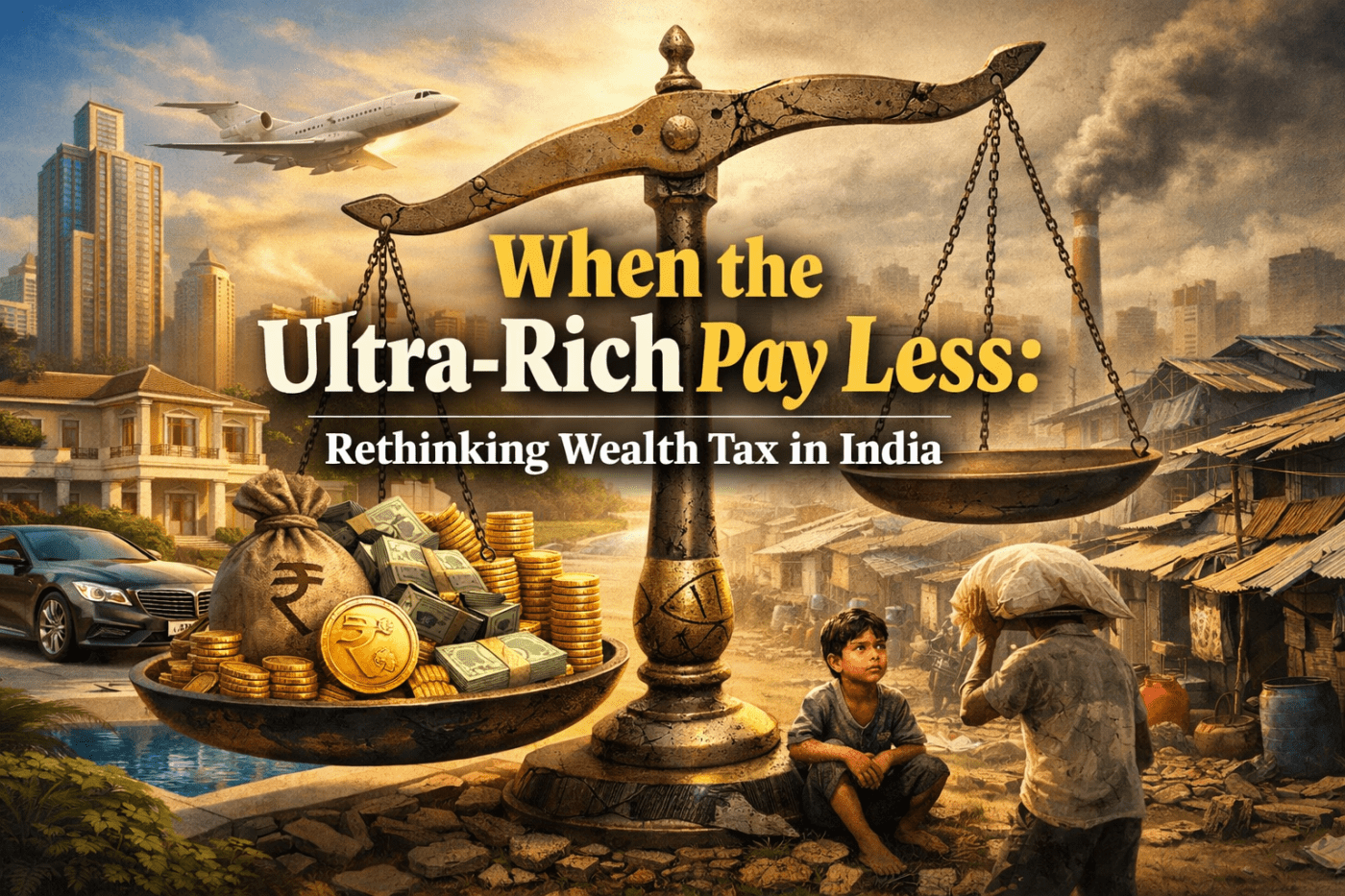
Think of the Indian economy as a large apartment building. Everyone pays maintenance. Some residents pay more because they own larger flats and use more resources. But imagine if the penthouse owners—those using the lifts the most, consuming the most electricity, benefiting from the best security—ended up paying less, proportionally, than the people in one-bedroom units.
That’s not resentment. That’s bad accounting.
In India, most taxation still falls on income and consumption. Middle-class salaried workers see taxes deducted before their salary even hits the bank. Small businesses navigate GST compliance monthly. Meanwhile, billionaire wealth largely sits in shares, holding companies, trusts, and assets that appreciate quietly—often taxed lightly or not at all until sold.
So when we say “Tax the Rich India,” we are not talking about taxing effort. We are talking about taxing accumulated, concentrated wealth that benefits enormously from public infrastructure, stable governance, and state-supported markets.
Why Billionaires Pay a Smaller Share Than You Think?
Here’s the counter-intuitive part: many of India’s wealthiest individuals pay less, as a percentage of their wealth, than a schoolteacher pays on her income.
Why? Because wealth and income are not the same thing.
A billionaire’s net worth grows when share prices rise. That growth isn’t counted as income unless assets are sold. Until then, it remains largely untaxed. Meanwhile, indirect taxes—GST on fuel, food, services—are paid by everyone, rich or poor, every single day.
Think of it like owning land that doubles in value every year but being taxed only on the vegetables you sell from it, not the land itself. Over time, the landowner becomes enormously rich while contributing very little back relative to the value gained.
That’s how wealth inequality quietly compounds.
Why Taxing Extreme Wealth Helps the Economy, Not Hurts It?
There’s a common fear that taxing billionaires will scare away investment or slow growth. It sounds logical—until you look closely.
India does not suffer from a shortage of private wealth. It suffers from a shortage of public investment capacity.
Every year, the country needs massive funding for education, healthcare, climate resilience, urban infrastructure, and scientific research. These are not luxuries. They are the foundation that allows businesses to function in the first place.
Imagine a startup founder refusing to pay for servers but expecting the app to scale. That’s essentially what happens when public systems are starved of funds while private wealth piles up at historic levels.
A modest wealth tax on ultra-high net worth individuals—carefully designed, limited in scope, and applied only at extreme levels—can unlock resources that fuel long-term economic productivity. Better roads reduce logistics costs. Healthier citizens work better. Educated youth innovate more.
That’s not redistribution for charity. That’s investment logic.
Addressing the “They Already Create Jobs” Argument
Yes, billionaires create jobs. That’s true. And they should be respected for it.
But here’s the missing half of that sentence: they create jobs within an ecosystem paid for by the public.
The ports, highways, courts, telecom spectrum, educated workforce, and financial systems that make billion-dollar businesses possible are funded by taxpayers—largely non-billionaire taxpayers.
Think of wealth tax as a usage fee for the economic highway. The heavier the vehicle, the more wear it causes, and the more it should contribute to maintenance.
This isn’t moral philosophy. It’s infrastructure math.
What a Sensible Wealth Tax Could Look Like in India?
No one is arguing for reckless or punitive taxation. A rational approach would be narrow, targeted, and transparent.
It would apply only above extremely high thresholds, ensuring entrepreneurs and professionals are untouched. It would focus on net wealth, not productive reinvestment. And it would be paired with strong compliance and clarity, not bureaucratic chaos.
Most importantly, the revenue would need visible, measurable deployment—schools built, hospitals upgraded, public transport improved—so citizens can see the return on collective contribution.
Trust grows when results are visible.
The Real Question We Avoid Asking
At its core, “Tax the Rich India” is not about billionaires. It’s about what kind of country India wants to become.
A nation where extreme wealth floats above public responsibility will eventually strain under inequality, social tension, and underfunded systems. A nation where prosperity contributes back—proportionally—builds stability, trust, and sustainable growth.
You don’t strengthen an economy by letting its foundations crack while polishing the penthouse.
Conclusion: Taxing the Rich Is About Fairness, Not Fury
India stands at a crossroads. The country has never had more wealth at the top—or more need at the bottom and middle. Ignoring that imbalance doesn’t make it disappear. It just delays the cost.
Taxing extreme wealth is not anti-growth. It is pro-future.
If you believe India’s success should be broad-based, resilient, and durable, then the idea that billionaires should contribute a fairer share isn’t radical at all. It’s responsible.
What do you think? Should India rethink how it taxes extreme wealth—or is the current system sustainable in the long run? Share your thoughts, challenge the argument, or explore related discussions on inequality and public finance. Real progress begins with honest conversations.

If you found this article valuable, please don’t forget to Like and Subscribe to my blog for more expert insights and updates.

 THE MIND UPGRADE
Leave a comment