27th November 2025, Gaurav Kumar Singh
From weekend parties to religious rituals, alcohol finds a place in cultures around the world. But behind every sip lies a fascinating mix of science, tradition, and technique. Whether you’re a casual drinker, a curious learner, or just someone who wants to understand their glass better — this is your complete guide to knowing your alcohol.
1. What Is Alcohol?
In chemistry, “alcohol” refers to a group of organic compounds, but the kind we drink is ethanol. It’s a psychoactive substance — meaning it affects your brain — and is produced naturally when yeast breaks down sugars in a process called fermentation.
But wait — did you know there are different types of alcohol?
Types of Alcohol (Chemically Speaking)
Type of Alcohol / Description / Use
Ethanol Safe for drinking (in moderation) Alcoholic beverages
Methanol Toxic, even in small amounts Industrial use, fuel
Isopropyl Alcohol Used as a disinfectant Medical use
So, the next time you hear “alcohol,” know that only ethanol is meant for human consumption!
2. Raw Materials Used to Make Alcohol
The source of sugar determines the type of alcoholic beverage produced. Here’s a quick look:
Beverage / Raw Material
Beer Barley, wheat, corn, rice
Wine Grapes (or other fruits)
Vodka Potatoes, wheat, rye
Rum Sugarcane, molasses
Whiskey Barley, corn, rye, wheat
Tequila Blue agave plant
Brandy Grapes or fruit wine
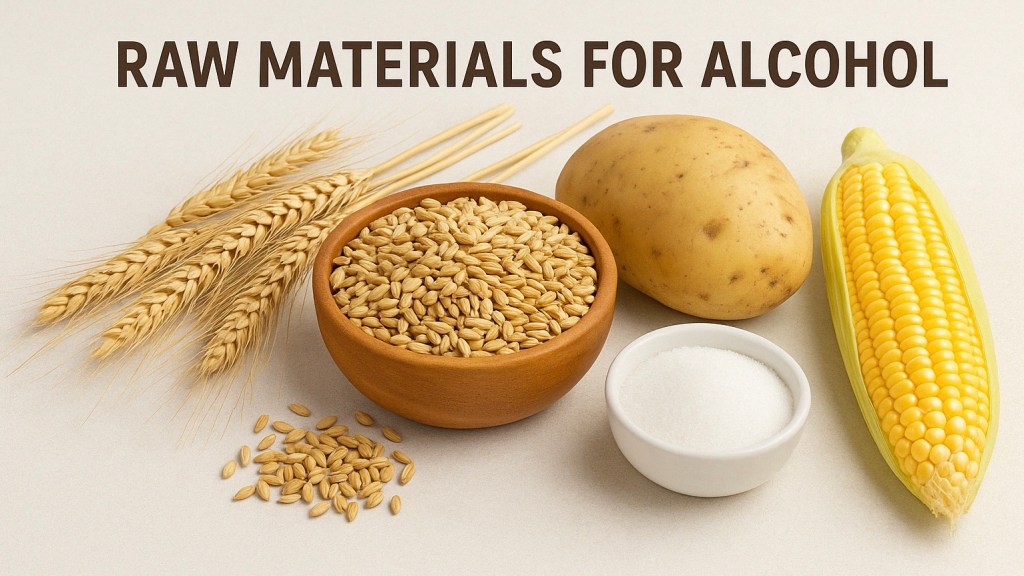
These ingredients are fermented to make alcohol and then sometimes distilled for higher strength.
3. How Is Alcohol Made?
A. Fermentation (Nature’s Alcohol Factory)
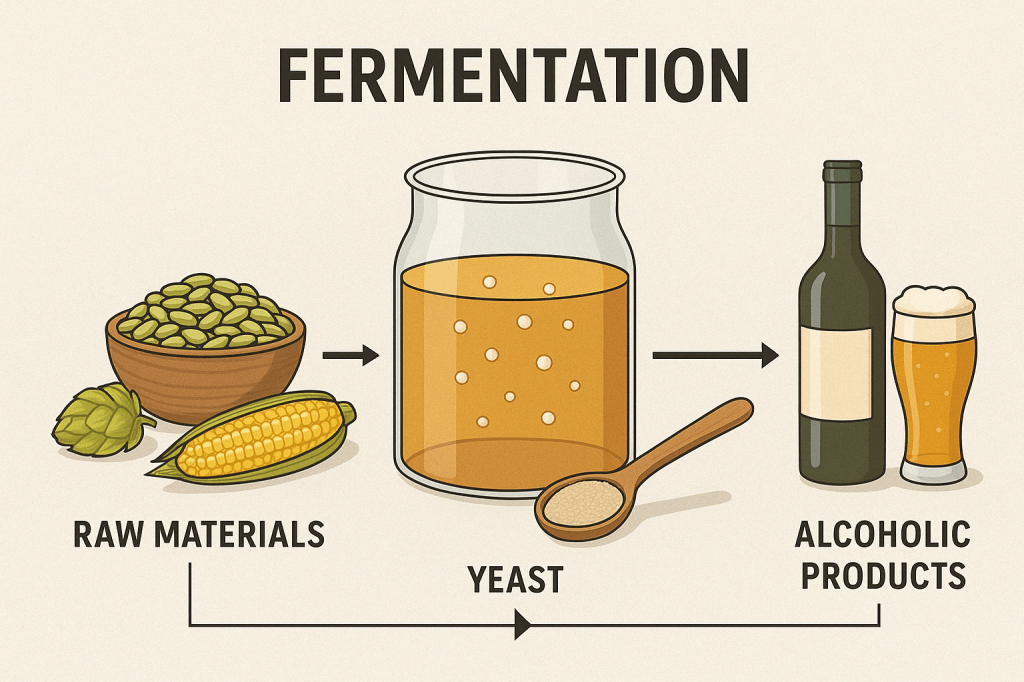
Fermentation is a natural process where yeast or bacteria convert sugars into alcohol and carbon dioxide. This is how most alcoholic drinks like beer and wine are made.
Basic Equation:
Sugar (from fruits or grains) + Yeast → Alcohol (Ethanol) + CO₂
• No oxygen required (anaerobic process)
• Typically done at controlled temperatures (20–30°C)
• Duration: few days to weeks depending on the drink
B. Distillation (Boosting the Power)
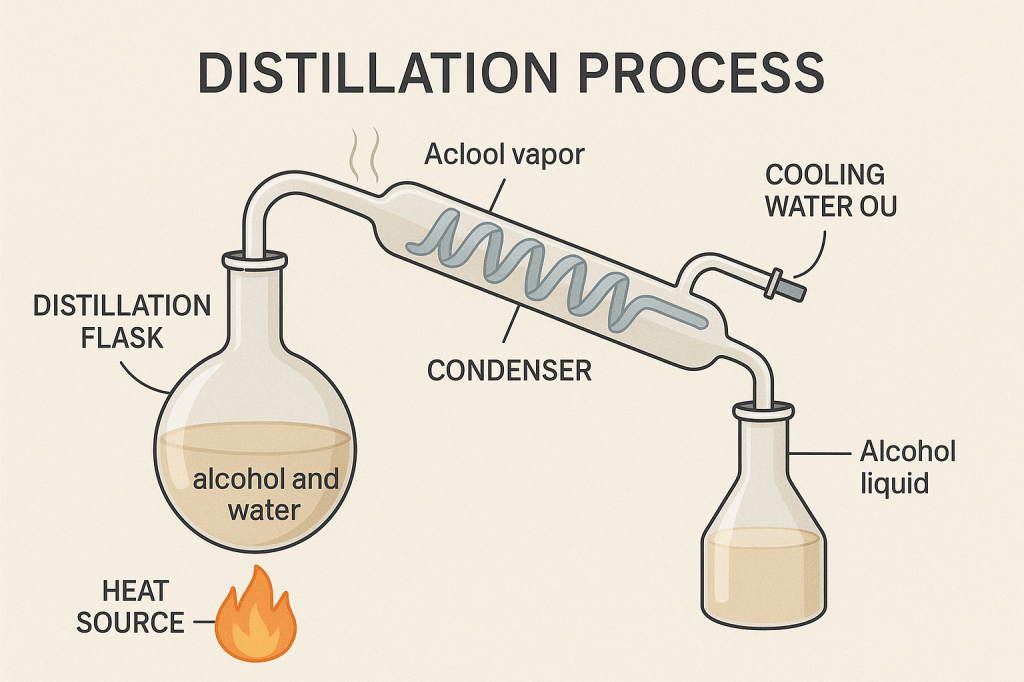
Distillation is used when you want stronger alcohol content.
• The fermented liquid is heated.
• Alcohol evaporates at a lower temperature than water.
• Vapors are collected and condensed back into liquid — that’s your spirit!
This process is used to make whiskey, vodka, rum, gin, brandy, and tequila.
4. Categories of Alcoholic Beverages
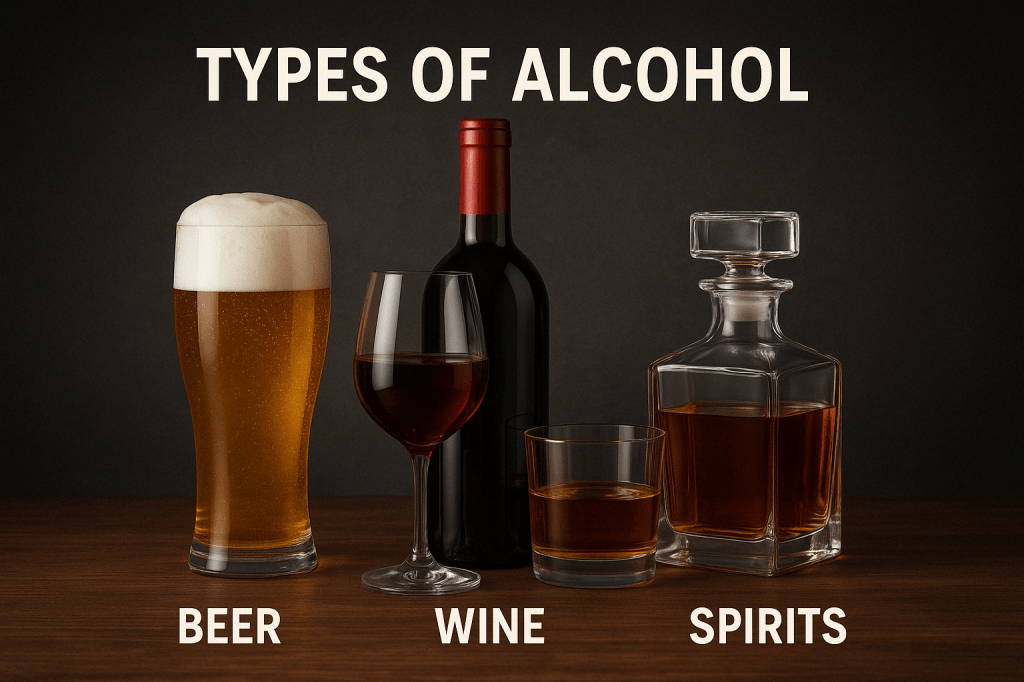
Let’s explore the major types and how they differ:
1. Beer
• Made from: Grains (mainly barley), hops, water, and yeast
• Process: Fermented (no distillation)
• ABV: 4–6%
• Types: Lager, Ale, Pilsner, Stout
2. Wine
• Made from: Grapes (sometimes other fruits)
• Process: Fermented
• ABV: 9–16%
• Types: Red, White, Rosé, Sparkling, Dessert Wine
3. Spirits (Liquor)
• Made from: Various grains, fruits, sugarcane, etc.
• Process: Fermented and distilled
• ABV: 35–50%
• Types:
• Whiskey – Distilled from grains, aged in barrels
• Vodka – Distilled from potatoes or grains, neutral flavor
• Rum – From sugarcane/molasses
• Gin – Flavored with botanicals like juniper
• Tequila – Made from the blue agave plant
• Brandy – Distilled from wine or fermented fruit juice
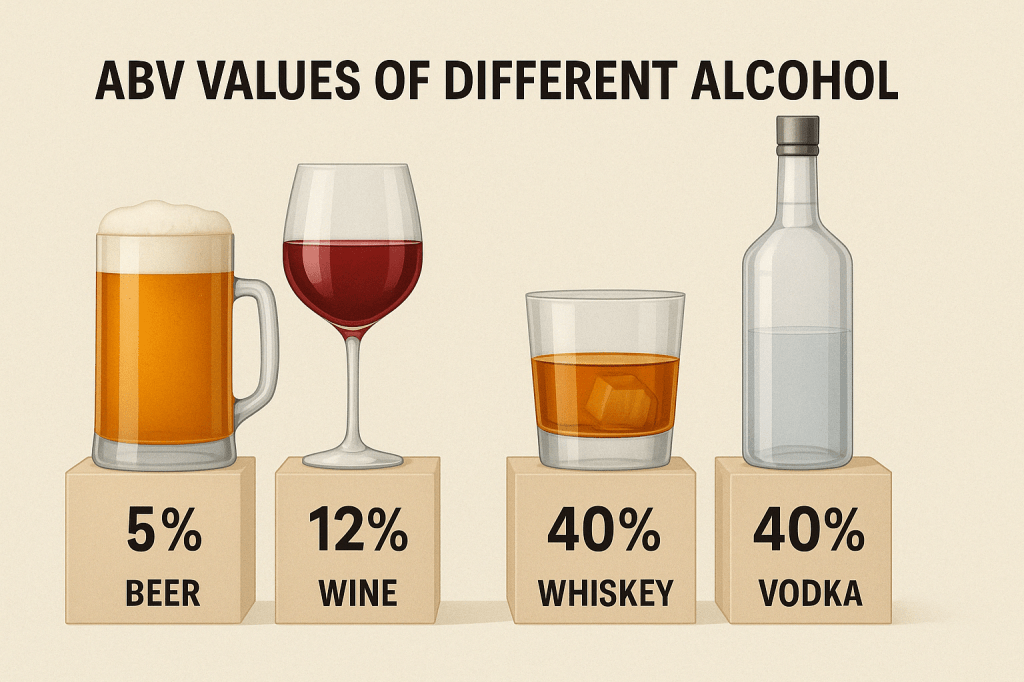
5. Alcohol Content: Understanding ABV
ABV = Alcohol by Volume
It tells you how strong a drink is.
Drink Typical ABV
Beer 4–6%
Wine 9–16%
Champagne 12%
Vodka, Rum, Whiskey 35–50%
Absinthe 45–75%
6. Fun Facts & Global Alcohol Stats
• Czech Republic consumes the most beer per capita in the world.
• France and Italy are famous for wine culture — both historically and in consumption.
• Vodka is the national drink of Russia, and is deeply tied to its cultural history.
• India is one of the fastest-growing liquor markets**, with a strong demand for whiskey.
Did You Know?
• The world’s strongest beer: Snake Venom (Scotland) with 67.5% ABV.
• The oldest known recipe in the world is for beer, dating back over 3,900 years (Sumerians).
• Moderate wine consumption is sometimes linked to heart health in Mediterranean diets — but moderation is key!
7. Health: Alcohol’s Impact on the Body
Short-Term Effects
• Relaxation, lowered inhibitions
• Impaired coordination, judgment
• Hangover: headache, dehydration, nausea
Long-Term Effects
• Liver diseases (fatty liver, cirrhosis)
• Increased risk of cancer and heart disease
• Dependency and addiction
Safe Drinking Guidelines
• Men: Up to 2 drinks/day
• Women: Up to 1 drink/day
• 1 Standard Drink = 350 ml Beer (5%)
150 ml Wine (12%)
45 ml Spirits (40%)
8. Non-Alcoholic Alternatives on the Rise
For those avoiding alcohol, there are now many cool options:
• Non-alcoholic beers & wines
• Zero-proof spirits for mocktails
• Kombucha and sparkling teas
Great taste — no buzz!
9. Final Thoughts: Drink Smart, Live Smart
Alcohol is more than just a drink — it’s a blend of history, culture, chemistry, and personal choice. Understanding what’s in your glass empowers you to enjoy it responsibly.
Whether you raise a toast or pass on the pour, now you truly know your alcohol.
 THE MIND UPGRADE
Leave a comment