25th October 2025, Gaurav Kumar Singh
Introduction: The Sticker Shock Moment
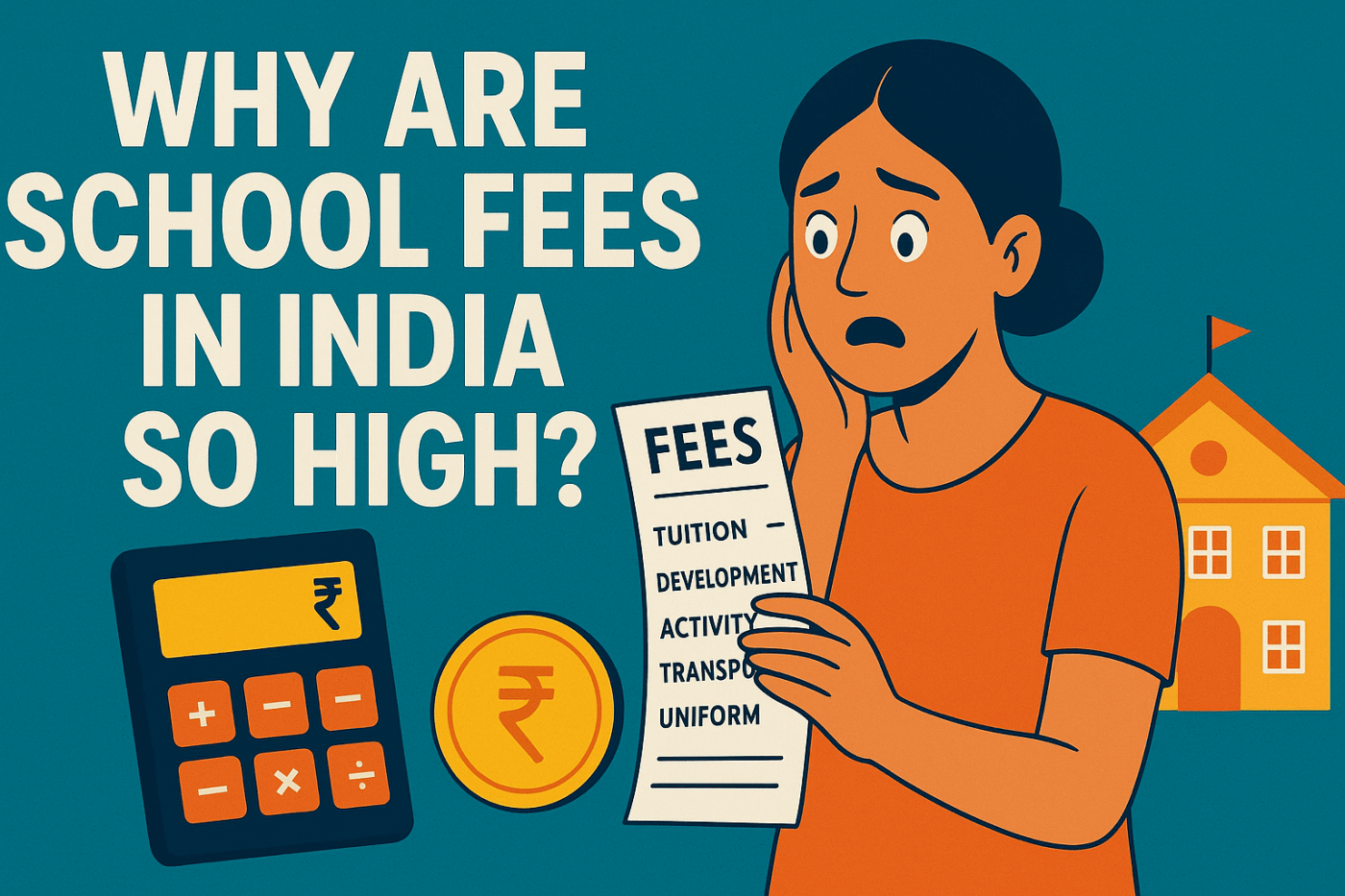
Imagine this—you’re at your child’s new school, waiting to pay the admission fees. The moment the staff hands you the fee slip, your eyes widen. Tuition fee, development fee, activity fee, transport, uniform… the list just doesn’t end. You do a quick mental calculation and think, “This costs more than my college education!”
If that sounds familiar, you’re not alone. Parents across India—from metros to small towns—are quietly wondering the same thing: why are school fees so high these days? Let’s break it down in plain, simple words.
The Short Answer: It’s Not Just About Education
In short, school fees in India are high because of growing demand for better education, fancy facilities, higher teacher salaries, and lots of hidden costs. Private schools have turned into full-service institutions—with every possible feature—and that comes at a price.
Now let’s dig a little deeper into what’s really going on.
Look Back: From Slate and Chalk to Smart Boards
Think of your parents’ time in school. Government schools were the go-to option, classrooms were simple, and teachers taught with chalk and blackboards. Now compare that to today’s schools with air-conditioned rooms, smart boards, swimming pools, and robotics labs.
As India’s middle class grew, so did the desire for “quality education.” Parents no longer wanted just good teaching—they wanted comfort, exposure, safety, and modern facilities. Over time, education became an “experience,” and like everything else, better experiences meant higher costs.
The Luxury School Trend: Paying for the “Wow” Factor
Let’s be honest—schools today often look like resorts. They promise everything from foreign language training to fitness programs. Schools compete to attract parents, and parents don’t want their kids to “miss out.”
Think of it like choosing a phone. A basic one does the job, but the expensive one offers more style and features. The same goes for schools—basic education is available, but parents prefer the school with better “extras.” This competition between schools pushes fees even higher.
Teachers and Staff: Good People, Good Pay
Behind every successful school are dedicated teachers. And good teachers deserve fair pay. But here’s the catch—modern schools hire more teachers, specialized instructors, counselors, and coordinators. Add in training expenses and administrative staff, and the cost multiplies.
It’s similar to running a restaurant. If you hire expert chefs for different cuisines and serve guests fancy meals, your costs—and your prices—are bound to rise.
The Hidden Charges Nobody Talks About
Sometimes, the biggest problem isn’t the main tuition—it’s the “extra” fees. You might see terms like “activity fee,” “maintenance charge,” or “infrastructure fee.” These often include costs for things like air conditioning, sports equipment, or even school celebrations.
Parents are often caught off guard, realizing that the advertised tuition is only part of the total bill. It’s like booking a hotel room online and discovering extra “service fees” when you check out.
Society’s Role: The Race for Prestige
Here’s a truth we don’t talk about enough—education in India has also become a status symbol. Many parents feel pressure to send their kids to well-known schools, fearing others will judge them otherwise.
It’s like the smartphone trend again. Even when a budget-friendly model works fine, people go for the premium one because of the name. The same emotional pull pushes families to pay more than they can comfortably afford.
The Burden on Families: When Dreams Become Expensive
For many families, the school fee is one of their biggest expenses—sometimes even higher than house rent or monthly groceries. Parents skip vacations, cut other costs, or take loans to meet education costs.
This isn’t just a city problem; rural and semi-urban families face it too. Everyone wants a better life for their children, and education feels like the safest path to get there—even if it stretches finances thin.
What the Future Could Look Like?
Will school fees keep going up? Maybe not forever. Some change is already happening. More parents’ groups are asking schools to justify their fees and show transparency. Meanwhile, government and affordable private schools are improving. Online learning and hybrid models may also reduce costs in the coming years.
The future of schooling in India could swing between traditional classrooms and newer, more flexible systems.
Conclusion: It’s More Than Just Money
The story of high school fees in India isn’t about greed alone—it’s about ambition, social pressure, and the hope for a brighter future. Every parent paying that big fee slip is investing in their child’s dreams.
But the question remains—how much is too much? It’s time we keep this conversation going as a society. Have you faced challenges paying school fees or found ways to manage them better? Share your experiences in the comments below.

If you found this article valuable, please don’t forget to Like and Subscribe to my blog for more expert insights and updates.

 THE MIND UPGRADE
Leave a comment