19th September 2025, Gaurav Kumar Singh
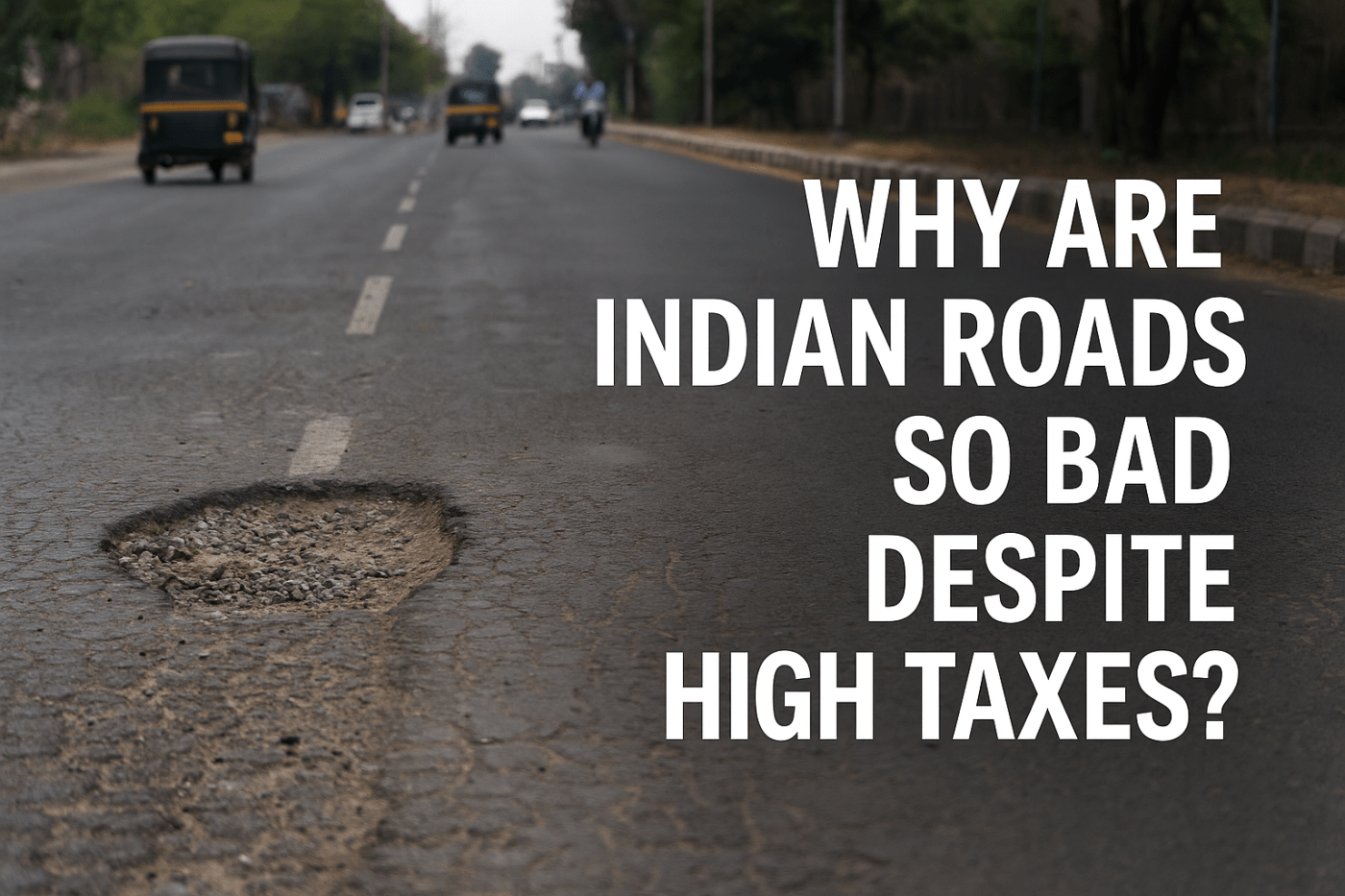
When you drive through Indian cities or highways, one thing feels constant—the bumpy ride. From pothole-filled streets in major metros to broken rural roads, the poor state of Indian roads is something every citizen experiences. But here’s the bigger puzzle: if Indians pay some of the highest fuel taxes, road taxes, and tolls, why are our roads still so bad? Let’s uncover the truth.
The Reality of Indian Roads
India has the “second-largest road network in the world”, covering more than 6 million kilometres. Roads are the backbone of transportation, carrying nearly 90% of passenger traffic and 65% of freight in the country. Yet, despite this importance, India is infamous for poor road quality and chaotic traffic conditions.
Take any city—Mumbai, Bengaluru, or Delhi—and you’ll find residents complaining every monsoon about potholes that appear overnight. In rural areas, many roads disappear altogether during heavy rains. Clearly, the problem is structural and not just about one city or season.
Why Roads Matter More Than We Think?
Good roads aren’t just about smoother drives. They directly impact:
1. Safety: India records over 1.5 lakh road accident deaths every year, with bad roads being a major contributor.
2. Economy: Broken roads slow down logistics, increase fuel consumption, and make Indian businesses less competitive.
3. Daily life: From morning commutes to school buses, road quality affects millions every single day.
The High Taxes Indians Pay
One reason for frustration is the perception of “tax mismatch”. Indians often ask: If we are paying so much, why don’t we see it on the ground?
1. Fuel taxes: Nearly 45–60% of petrol and diesel prices are taxes.
2. Road tax: Vehicle owners pay one-time road tax while buying vehicles.
3. Tolls: Highway users pay tolls, often for years after a road project is built.
Despite this heavy contribution, the results are far from satisfactory.
Where Does the Money Go?
The truth lies in how funds are used rather than how much is collected.
1. Diversion of funds: Fuel taxes often go into the central kitty, not specifically for road maintenance. This means your petrol tax might fund healthcare, defence, or other government expenses.
2. Maintenance neglect: Building new highways gets political attention, but road maintenance gets far less priority.
3. Leakages and corruption: A significant portion of funds is lost in bureaucratic inefficiency, inflated project costs, or corruption.
4. Toll paradox: In many places, people continue to pay tolls long after project costs have technically been recovered.
Real-Life Example: Mumbai-Pune Expressway
Take the Mumbai-Pune Expressway, one of India’s busiest highways. Despite high toll charges, accidents due to potholes and poorly maintained sections are common. The toll collection continues year after year, but repairs remain temporary and inconsistent.
Systemic Issues Behind Poor Roads
Beyond money, several deep-rooted factors keep Indian roads in bad shape.
Poor Quality Materials and Shortcuts
Contractors sometimes use low-quality asphalt or skip required layering, meaning roads can’t withstand monsoon rains or heavy trucks. For example, highways in the US or Europe often last 10–15 years before major repairs, while many Indian roads start breaking within a year or two.
Lack of Accountability
If you hit a pothole and damage your car, who do you hold responsible? In India, it’s unclear. Contractors, municipal bodies, or public works departments often pass the blame, resulting in little accountability.
Weak Road Design
Many roads lack proper drainage systems. That’s why after every monsoon, potholes reappear, as water eats away at the road surface.
Overloaded Vehicles
Trucks in India often exceed weight limits, putting pressure on road surfaces and causing early damages.
Is Government Spending Enough?
India does spend a massive budget on road construction. Programs like Bharatmala Pariyojana aim to modernise highways. However, the gap lies in maintenance, execution, and transparency. A highway built with international standards can deteriorate quickly if repair budgets are ignored or misused.
What Can Be Done?
Fixing India’s road problem is not impossible. Some solutions include:
1. Dedicated road maintenance funds instead of pooling everything into general revenue.
2. Better accountability systems where contractors are held responsible for road conditions for a fixed period.
3. Use of technology like cold mix asphalt, plastic roads, and sensors to monitor road health.
4. Public awareness and pressure to demand transparency about how taxes and tolls are used.
Final Thought
Bad roads in India are not because people don’t pay enough taxes—it’s because of misuse, poor planning, and lack of accountability. Citizens deserve roads that match the money they spend, and only consistent pressure on authorities can push for long-lasting change. Next time you drive over a pothole, remember—it’s not just bad luck, it’s a systemic problem that needs urgent fixing.
What do you think? Have you experienced bad roads in your city despite paying heavy taxes and tolls? Share your thoughts in the comments and explore our other blogs on infrastructure and public policy.

If you found this article valuable, please don’t forget to Like and Subscribe to my blog for more expert insights and updates.

 THE MIND UPGRADE
Leave a comment