11th August 2025, Gaurav Kumar Singh
What Is Lifestyle Creep?
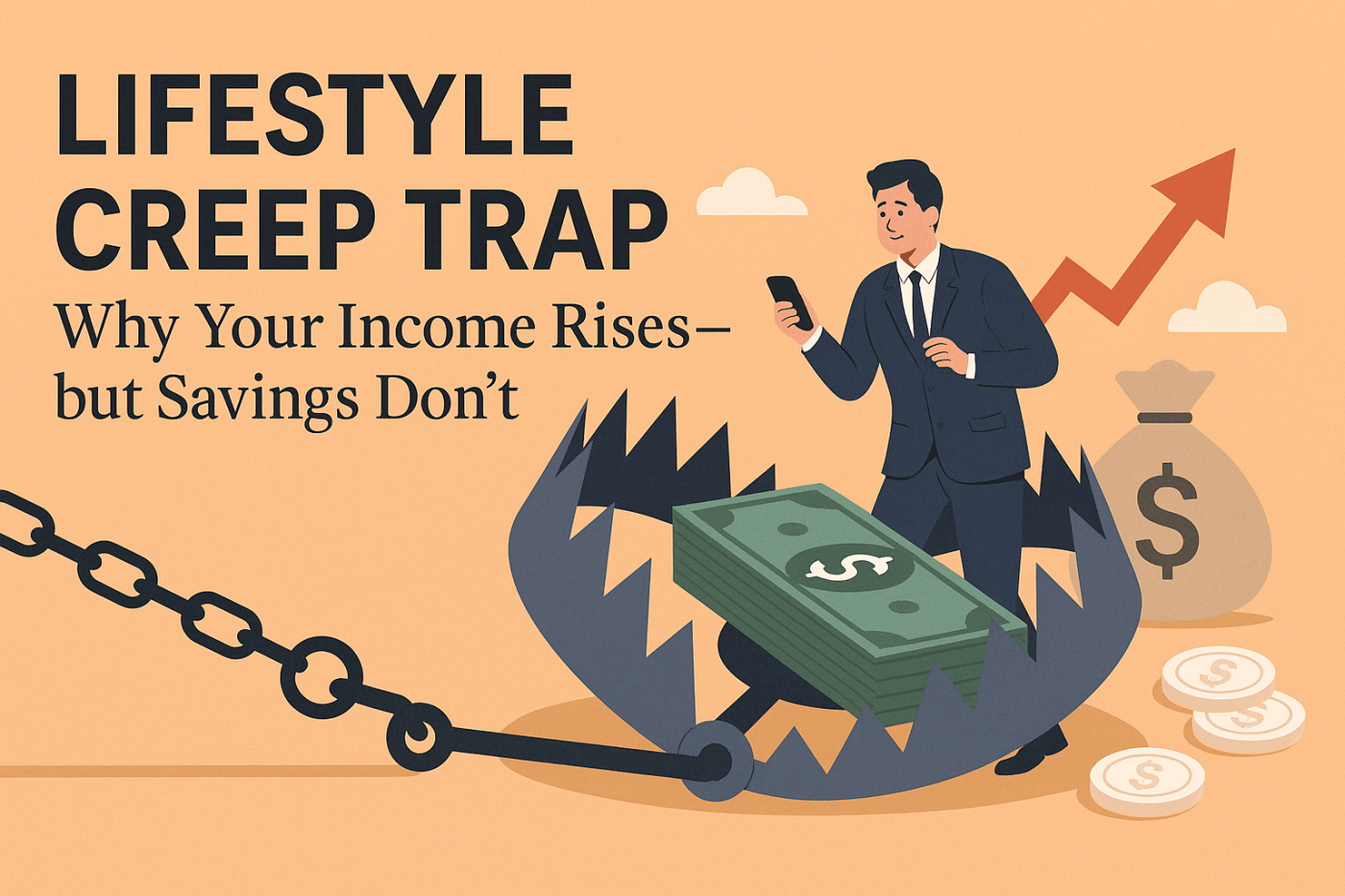
Lifestyle creep, also called “lifestyle inflation”, happens when your spending quietly increases alongside your income. What begins as a well-deserved upgrade—nicer dinners, a new car, a better phone—often turns into a long-term obligation that eats into your savings. Former luxuries become new necessities, leaving little room for wealth building.
Real-Life Examples of Lifestyle Creep
1. Upgrading cars or homes: Moving from a basic sedan to a luxury car, or renting/purchasing a bigger house because you “can afford it now.” The monthly payments and maintenance quickly add up.
2. Dining and entertainment: Eating out more frequently, subscribing to multiple streaming services, or purchasing premium club memberships—all justified by a higher salary.
3. Grocery habits: Picking only branded or “gourmet” items, when you used to shop for deals.
4. Vacationing: Booking costlier vacations or flights—all because “you’ve worked hard and deserve it.”
5. Services: Paying for convenience, such as lawn care or household help, simply because your time feels more valuable.
Most people don’t notice this change until expenses have outpaced their actual earnings—and saving for emergencies, retirement, or big goals gets pushed aside.
“The danger with lifestyle creep is that it is insidious and one never really realises when it creeps up on you. So be cautious.”
Why Is Lifestyle Creep So Dangerous?
While upgrading your life is natural when you earn more, unchecked lifestyle creep can have serious financial consequences:
1. Reduced Savings: More spending means less leftover for investments, emergency funds, or retirement savings.
2. Debt Accumulation: Keeping up with upgraded expenses may lead to more borrowing and increased credit card balances.
3. Lost Financial Freedom: Without careful planning, you’ll find yourself living paycheck-to-paycheck even as your income rises, making future financial independence harder to achieve.
4. Hard to Adjust Down: Once accustomed to a certain lifestyle, scaling back feels uncomfortable—making financial setbacks or retirement much more stressful.
Analogy: The “Mowed Lawn” Example
Consider the classic example: you used to mow your own lawn. After getting a raise, you pay someone else to do it—more time for yourself! But soon, that convenience is baked in, and going back feels impossible. With each expense upgrade, former frugality becomes harder to return to, and lifestyle creep cements itself.
Signs You’re Experiencing Lifestyle Creep
Ask yourself:
Are you saving less, even though your income has grown?
Have you abandoned budgeting, assuming your earnings are high enough?
Is your credit card debt rising?
Do you feel entitled to regular expensive purchases that used to be treats?
Are you keeping up “just because” others (friends, colleagues) are upgrading their lives?
If you answered “yes” to any of these, it’s time to take action.
How to Avoid Lifestyle Creep (Actionable Strategies)
1. Track and Audit Your Spending
Regularly review your expenses—both one-time and recurring payments. Use budgeting apps or spreadsheets to spot trends and identify unnecessary upgrade.
2. Pay Yourself First
Automate savings and investments before spending on discretionary items. Whenever your income rises, increase your savings or investment contributions first.
3. Set Clear Financial Goals
Define exactly what you want—retirement, buying a house, building an emergency fund. Having a purpose for your money makes it easier to reduce impulse buys and focus on long-term security.
4. Celebrate Mindfully
Enjoy your achievements and income boosts, but do so with moderation. Find ways to treat yourself without making luxury spending a constant.
5. Create and Stick to a Budget
A budget helps balance essentials, fun, and savings. As income increases, recalibrate your budget to allocate more toward saving, investing, or paying down debt. Revisit your budget often to stay on track.
6. Automate Your Savings
Set up automatic transfers to savings or investment accounts. This removes temptation and ensures priority goes to saving—helping you grow wealth even if you’re prone to spend impulsively.
7. Save a Percentage of Each Raise
Try these “thumb rules”:
Spend “twice your years to retirement” from a raise, save the remainder (e.g., retiring in 10 years: spend 20%, save 80%).
“Save your age” as a percentage of your raise (e.g., if you’re 40, save 40%).
Save “at least 33%” of any income increase.
8. Avoid Lifestyle Comparisons
Resist “keeping up with the Joneses.” Social media and peer pressure can trigger unnecessary upgrades. Focus instead on your own needs and goals.
9. Limit Revolving Debt
If credit card balances are rising faster than you can pay off, reassess your lifestyle choices and cut back.
10. Review Subscriptions and Memberships
Audit your monthly memberships and subscriptions. Cancel the ones you don’t use or truly value.
11. Practice Delayed Gratification
Wait 48 hours before buying any non-essential item. This curbs impulse spending and separates wants from needs.
Let Your Savings Grow with Your Income
As you earn more, make sure your savings and investment contributions increase proportionally—not just your spending.
For example, use a systematic investment plan (SIP) to automatically increase contributions, leveraging compounding and building long-term wealth.
There Is Always a Balance
You don’t need to save every bit of extra income, nor should you spend it all—find a balance that aligns with your financial goals and values. The more aggressively you save, the less pressure there is to upgrade your lifestyle. By spending less, you have more freedom and less stress about expenses.
Share and Join the Discussion!
Have you noticed lifestyle creep in your own life? What tips have helped you save more as you earned more? Drop your thoughts in the comments below—share your story, or tag a friend who needs these tips. For more articles on smart money habits, budgeting, and wealth building, explore our Personal Finance section!
“Outsmart lifestyle creep to build lasting wealth—not just a comfortable present. Your future self will thank you.”

If you found this article valuable, please don’t forget to Like and Subscribe to my blog for more expert insights and updates.

 THE MIND UPGRADE
Leave a comment