24th July 2025, Gaurav Kumar Singh
Introduction
The rise of digital banking, e-commerce, and mobile apps in India has brought unprecedented convenience—but also opened doors for financial fraud. From villagers to urban professionals, no one is immune. Scammers have mastered the art of deception, using fear, urgency, or fake opportunities to trick victims into giving away money or personal details.
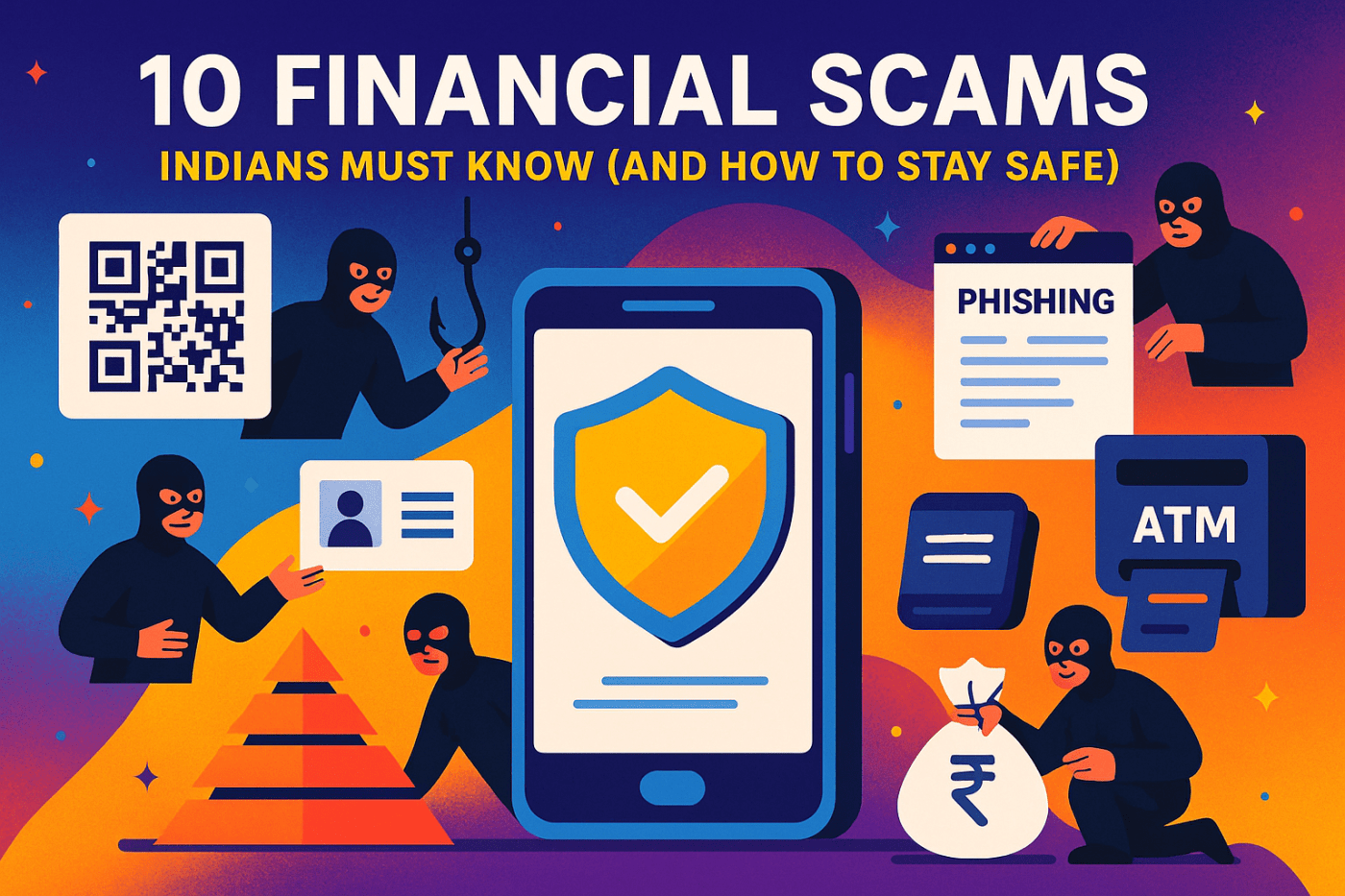
Here’s a detailed breakdown of the top 10 most common financial scams in India—and how you can stay one step ahead.
1. Phishing & Smishing Scams
❗ What Happens:
Scammers send fake emails (phishing) or SMS messages (smishing) pretending to be from banks, tax departments, or government bodies. These messages may threaten account suspension or lure you with a tax refund, asking you to click a link or fill in sensitive information.
Example:
Ravi received an SMS that said:
“Your SBI account will be blocked. Click here to update PAN.”
He clicked the link, entered his credentials, and lost ₹25,000 in minutes.
✅ How to Avoid:
Never click on links from unknown sources.
Check the sender’s email or phone number carefully.
Go to the official bank website directly to verify any claims.
Banks never ask for OTPs, passwords, or full card numbers via SMS or email.
2. UPI & QR Code Scams
❗ What Happens:
Scammers posing as buyers on platforms like OLX or Facebook Marketplace send QR codes saying they are “sending” money. But the QR actually triggers a payment request—so when you enter your UPI PIN, you are paying them.
Example:
A seller on OLX received a QR code from a “buyer.” On scanning and entering his PIN, ₹9,000 was debited instead of credited.
✅ How to Avoid:
QR codes are only for sending, not receiving money.
Never enter your UPI PIN to receive funds.
Always confirm transactions in the official app (Paytm, PhonePe, etc.).
Use only verified UPI handles and avoid unknown users.
3. Ponzi Schemes & MLM Scams
❗ What Happens:
Scammers promise high returns for investing and recruiting others. The scheme depends on new people joining in—when that stops, the whole system collapses.
Example:
Sarita invested ₹50,000 in a crypto MLM promising 30% monthly returns. She received money for 2 months. Then the company’s website vanished.
✅ How to Avoid:
Be wary of schemes offering guaranteed returns over 15%.
Check if the company is registered with SEBI or RBI.
Don’t invest just because someone you know has—many Ponzi victims unknowingly recruit others.
Avoid pressure to recruit friends or family.
4. Fake Loan Apps
❗ What Happens:
Fraudulent apps promise instant loans. Once installed, they collect your contacts, gallery, and personal information. Victims are often charged hidden fees or harassed by recovery agents.
Example:
Rohit borrowed ₹5,000 through an app. A week later, agents demanded ₹12,000 and started sending morphed pictures to his contacts.
✅ How to Avoid:
Use apps from RBI-approved NBFCs only.
Check app reviews and developer info on Google Play or Apple App Store.
Don’t allow unnecessary permissions.
Never pay processing fees upfront.
5. Credit Card & ATM Skimming
❗ What Happens:
Scammers install hidden devices in ATMs or POS machines to clone your card. Hidden cameras or overlays record your PIN. Your card is then cloned and used without your knowledge.
Example:
Neha used a local ATM. Three days later, ₹40,000 was withdrawn from another city.
✅ How to Avoid:
Use ATMs in well-lit, secure areas with CCTV.
Check for tampered parts on the card slot.
Always cover the keypad when entering your PIN.
Check your bank statement regularly for unauthorised charges.
6. KYC Update Fraud
❗ What Happens:
Scammers pretend to be from your bank and call or text asking you to update your KYC urgently. They request personal details or guide you to fake websites.
Example:
Mohammed received a call asking to update KYC. He followed instructions and lost ₹18,000.
✅ How to Avoid:
Banks never ask for KYC via phone or SMS.
Update KYC only through official bank apps or branches.
Don’t share Aadhaar, PAN, or OTP over a call.
If unsure, call customer care directly.
7. Stock Market Investment Fraud
❗ What Happens:
You’re lured with “guaranteed” stock tips or insider info. Scammers may show fake profit screenshots and ask you to invest via unregulated platforms.
Example:
Divya joined a WhatsApp group offering “hot tips.” She transferred ₹20,000 to a Demat account they created. The money disappeared in a week.
✅ How to Avoid:
Only deal with SEBI-registered advisors.
Avoid shady Telegram/WhatsApp groups.
Never invest on platforms that don’t have regulatory approval.
Use verified apps like Zerodha, Upstox, or Groww.
8. Fake Job Scams
❗ What Happens:
You get an email or message offering a job and are asked to pay for a “registration” or “training kit.” After paying, there’s no response, or you’re ghosted after an interview.
Example:
Ankush was offered a remote data entry job and asked to pay ₹3,000. Once paid, the recruiter disappeared.
✅ How to Avoid:
No legitimate company charges money to hire.
Verify company details via LinkedIn, Google, or ROC filings.
Avoid offers from email addresses like hrjoboffer2025@gmail.com.
Don’t share documents unless it’s a verified recruiter.
9. Insurance Scam
❗ What Happens:
Fraudsters pose as IRDAI agents or insurance company staff, claiming your lapsed policy can be revived or offering massive bonuses. They may ask you to transfer money urgently.
Example:
Suresh was told his old LIC policy was eligible for a bonus if he paid ₹7,500. He paid—but later found the call was a scam.
✅ How to Avoid:
Check agent registration on IRDAI’s portal.
Don’t fall for urgent or bonus claims.
Call the insurer’s official helpline for verification.
Make payments directly on the insurer’s official website.
10. Online Marketplace & Classified Scams
❗ What Happens:
Fraudsters on OLX, Quikr, etc., pose as army men or professionals. They create urgency, share fake IDs, and send fraudulent payment confirmations.
Example:
Priya was selling her microwave. A man posing as an Army officer sent a fake Paytm screenshot and asked her to “refund” ₹8,000 that “accidentally” came. She never got the amount but ended up sending him the refund.
✅ How to Avoid:
Never rely on screenshots—wait for actual bank credits.
Avoid prepayments or online refunds to strangers.
Meet in public places or use Cash on Delivery (COD).
Verify IDs and avoid emotional stories.
🔐 Tips to Stay Safe from Financial Frauds
✅ Be skeptical of offers that are too good to be true
✅ Always use official apps for banking, UPI, and investments
✅ Never share OTPs, UPI PINs, or Aadhaar details over phone or message
✅ Install antivirus & keep your phone’s security updated
✅ Report frauds at cybercrime.gov.in or call 1930
Final Thoughts
Fraudsters are evolving every day, but so can you—through awareness and digital hygiene. Financial scams in India are widespread, but that doesn’t mean you have to fall for one. Learn, share, and stay cautious. If something feels off, it probably is.
Stay alert. Stay safe. Spread the word.

If you found this article valuable, please don’t forget to Like and Subscribe to my blog for more expert insights and updates.

 THE MIND UPGRADE
Leave a comment