21st July 2025, Gaurav Kumar Singh
Introduction
Our body thrives in balance. One of the most critical balances it maintains is core body temperature, ideally around 98.6°F (37°C). But what happens when this delicate equilibrium shifts too far in either direction?
Enter two medical emergencies: Hyperthermia and Hypothermia. Though they sound similar, they’re fundamentally different in cause, symptoms, and treatment. This blog breaks down these two conditions in clear, easy-to-understand terms so you can recognise, respond, and potentially save a life.
🔥 What is Hyperthermia?
Hyperthermia occurs when the body overheats, and it’s unable to cool down fast enough. It typically results from excessive heat exposure, particularly in hot weather or during intense physical activity.
👇 Causes of Hyperthermia:
Prolonged exposure to hot, humid environments
Overexertion during physical activity
Wearing heavy clothing in heat
Dehydration
Certain medications or medical conditions
🔍 Types of Hyperthermia:
Heat Cramps – Muscle spasms due to electrolyte loss.
Heat Exhaustion – Heavy sweating, weakness, nausea.
Heat Stroke – The most severe form; body temp rises above 104°F (40°C), possibly leading to organ failure.
⚠️ Symptoms of Hyperthermia:
Flushed or red skin
Dizziness or confusion
Rapid heartbeat
Excessive sweating (early stage), then dry skin (later stage)
Nausea or vomiting
Muscle cramps
Loss of consciousness (in severe cases)
🏥 Treatment for Hyperthermia:
Move to a cool, shaded area
Remove excess clothing
Apply cold compresses or take a cool bath
Drink water or electrolyte drinks
Seek emergency help immediately for heat stroke
❄️ What is Hypothermia?
Hypothermia occurs when the body loses heat faster than it can produce it, causing core temperature to drop below 95°F (35°C). It’s most common in cold, wet, or windy conditions.
👇 Causes of Hypothermia:
Prolonged exposure to cold temperatures
Falling into cold water
Wearing inadequate clothing in cold weather
Staying in a cold home (especially for elderly people)
Alcohol or drug use impairing body temperature regulation
🔍 Stages of Hypothermia:
Mild Hypothermia – Shivering, cold skin, fatigue.
Moderate Hypothermia – Slurred speech, confusion, drowsiness.
Severe Hypothermia – No shivering, unconsciousness, possible cardiac arrest.
⚠️ Symptoms of Hypothermia:
Intense shivering (early stage)
Pale, cold skin
Slow breathing or heartbeat
Loss of coordination
Memory loss or slurred speech
Exhaustion
Unresponsiveness (in extreme cases)
🏥 Treatment for Hypothermia:
Move the person indoors or to a warmer place
Remove wet clothing
Use blankets or body heat to rewarm
Offer warm, sweet beverages (if conscious)
Do NOT rub limbs or use direct heat like hot water bottles
Call emergency services immediately
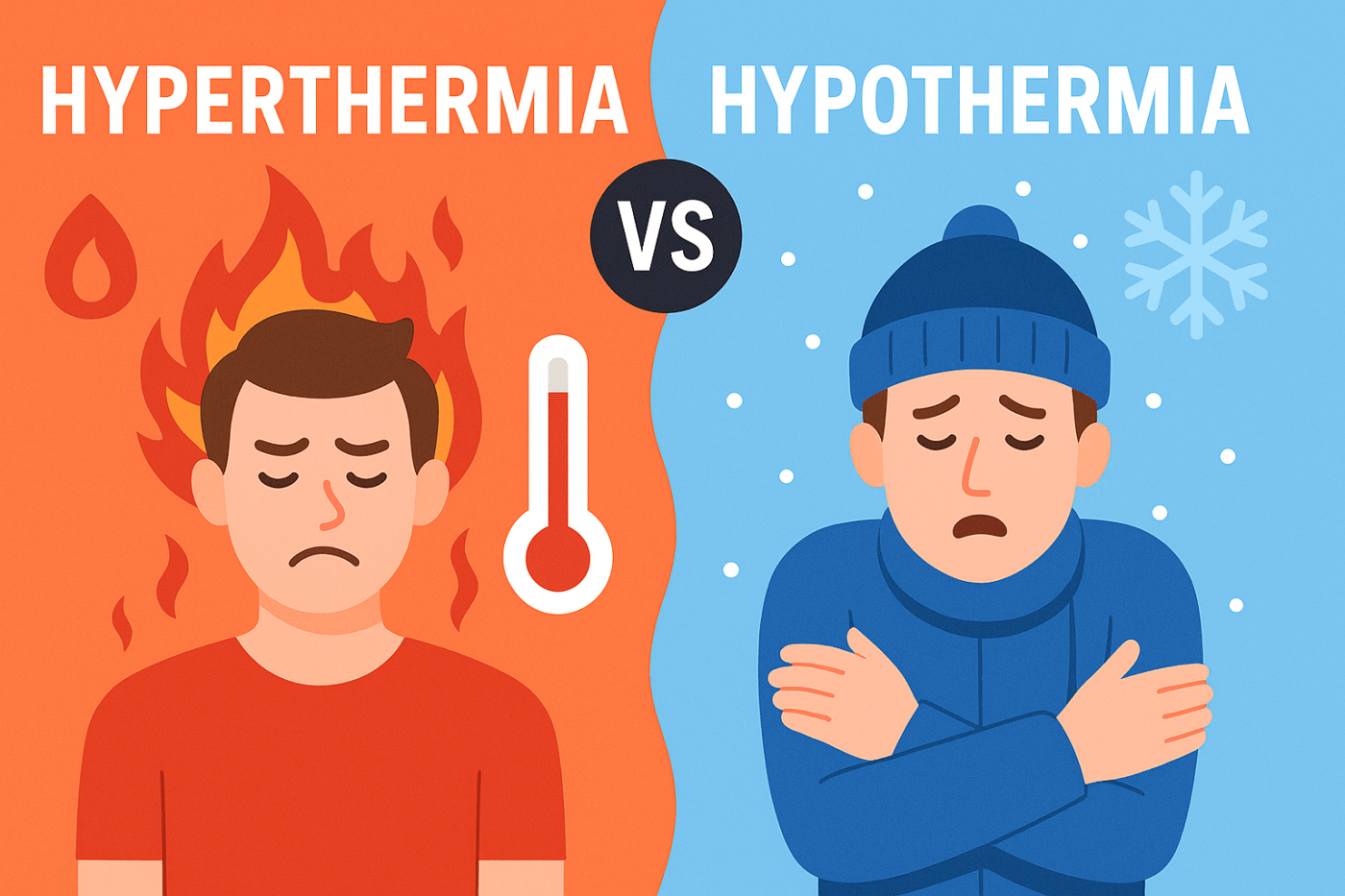
🆚 Key Differences: Hyperthermia vs Hypothermia
Hyperthermia
Body Temperature: Too High (>104°F or 40°C)
Cause: Heat overload
Symptoms: Flushed skin, Rapid pulse, Confusion, Dry skin
Treatment: Cool down immediately
Risk Factors: Hot weather, Overexertion, Dehydration
Hypothermia
Body Temperature: Too Low (<95°F or 35°C)
Cause: Cold exposure
Symptoms: Shivering, Pale skin, Drowsiness, Slow heart rate
Treatment: Warm up gradually
Risk Factors: Cold weather, Wet clothing, Immobility
👨⚕️ Who is Most at Risk?
Elderly individuals
Infants and small children
People with chronic illnesses
Outdoor workers
Athletes and hikers
Homeless or displaced individuals
🌡️ Prevention Tips
✅ To Avoid Hyperthermia:
Stay hydrated
Avoid strenuous activity during peak heat
Wear light, breathable clothing
Take breaks in the shade
Use fans or air conditioning
✅ To Avoid Hypothermia:
Dress in layers
Stay dry
Cover extremities (gloves, hats, socks)
Limit time outdoors in extreme cold
Be prepared during winter travel
🧠 Final Thoughts
Understanding the difference between hyperthermia and hypothermia can be life-saving. Whether you’re heading out on a summer hike or preparing for winter camping, awareness and early action are your best allies. These extreme temperature conditions demand respect — and prompt response — to keep your body safe and balanced.

If you found this article valuable, please don’t forget to Like and Subscribe to my blog for more expert insights and updates.

 THE MIND UPGRADE
Leave a comment