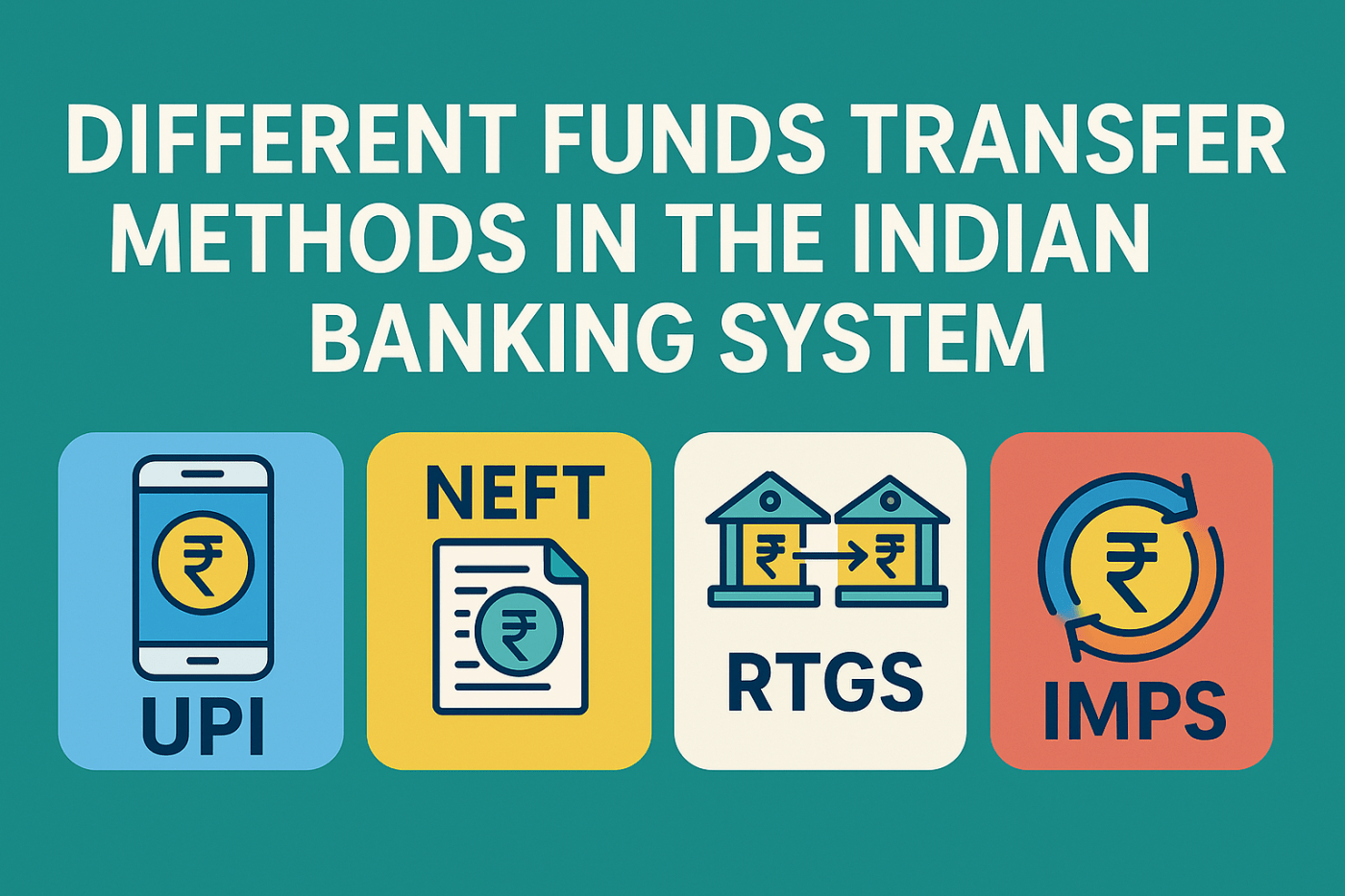
20th July 2025, Gaurav Kumar Singh
🏦 Introduction
India has become a global model for digital banking. Thanks to platforms like UPI and IMPS, even a street vendor in a Tier-3 town can accept real-time payments. But not all fund transfer needs are the same—paying a friend for coffee is very different from paying a supplier ₹10 lakhs for machinery.
So, which fund transfer method should you choose? Let’s decode each method in the Indian banking system—with real-world examples, limits, and use cases—to help you decide smartly.
🔹 1. NEFT (National Electronic Funds Transfer)
📌 What It Is:
NEFT is a nationwide electronic fund transfer system launched by RBI. It allows you to send money from any bank to any other bank in India.
🔍 Features:
Batch processing: Transactions are settled in half-hourly batches.
Available 24×7, even on Sundays and holidays.
Suitable for individuals, businesses, and government payments.
✅ Example:
Rohit wants to pay ₹25,000 to his landlord’s account in another city. He logs into his bank app and transfers the amount using NEFT. The money is credited within 1 hour.
💼 Ideal For:
Rent payments
Freelance payments
Medium-value business transactions
🧾 Charges:
Mostly free for retail users. Some banks charge ₹1 to ₹5 for corporate/bulk NEFT.
🔹 2. RTGS (Real-Time Gross Settlement)
📌 What It Is:
RTGS is designed for high-value, time-sensitive transactions. Payments are settled immediately and individually, not in batches.
🔍 Features:
Minimum amount: ₹2,00,000
No upper limit
Real-time settlement
✅ Example:
A company buying raw materials worth ₹15 lakh needs to pay the supplier urgently. They use RTGS from their current account to settle the payment instantly.
💼 Ideal For:
Real estate transactions
Business-to-business (B2B) payments
Government dues
🧾 Charges:
Usually free for online RTGS. May vary from ₹15–₹50 for offline branch-based transfers.
🔹 3. IMPS (Immediate Payment Service)
📌 What It Is:
IMPS is a real-time, 24×7 money transfer service initiated by NPCI. It works even on bank holidays and Sundays.
🔍 Features:
Instant settlement
Available via net banking, mobile banking, ATM, and even SMS
Max limit: ₹2 lakh (can vary by bank)
✅ Example:
Priya forgot to pay her college exam fee on a Sunday. Using her mobile banking app, she uses IMPS to instantly transfer ₹1,500 to the university’s bank account.
💼 Ideal For:
Urgent payments
Friends and family transfers
Bill payments
🧾 Charges:
₹2 to ₹10 depending on the amount, but many banks offer it for free now.
🔹 4. UPI (Unified Payments Interface)
📌 What It Is:
UPI allows instant bank-to-bank transfers using a simple mobile number or UPI ID, with no need for IFSC or account number.
🔍 Features:
No need to log into net banking
Scan-and-pay via QR code
Most popular payment mode in India
Limits vary: Usually ₹1 lakh to ₹5 lakh per day
✅ Example:
Anita buys groceries worth ₹800. She scans the shopkeeper’s QR code using PhonePe and pays instantly from her SBI bank account via UPI.
💼 Ideal For:
Day-to-day personal expenses
Small business collections
Utility bill payments
Peer-to-peer money transfers
🧾 Charges:
Free for users (zero transaction fee)
🔹 5. Aadhaar Enabled Payment System (AEPS)
📌 What It Is:
AEPS allows basic banking services like balance inquiry, cash withdrawal, and fund transfer using Aadhaar number and biometric authentication.
🔍 Features:
Used in rural areas via micro-ATMs
No debit card or smartphone required
Often used by pensioners and direct-benefit-transfer (DBT) recipients
✅ Example:
A farmer in a remote village withdraws ₹500 cash from his Jan Dhan account using his Aadhaar number and fingerprint at a CSP (Customer Service Point).
🔹 6. Cheque and Demand Draft (Traditional Methods)
🧾 Cheque Transfer:
You write a cheque to someone who then deposits it into their bank account.
Example: A tenant pays ₹50,000 rent via post-dated cheque every month.
🧾 Demand Draft:
A prepaid instrument issued by a bank, often used for university admissions, visa applications, etc.
Example: A student applying for an MBA course in Delhi sends a ₹75,000 DD for fees to the college.
📊 Comparison of Fund Transfer Methods in India (2025)
🔹 1. NEFT (National Electronic Funds Transfer)
Speed: 30–120 minutes
Availability: 24×7
Limit: No limit
Cost: Mostly free
Best Use: Medium-value transfers, rent payments, salary disbursements
🔹 2. RTGS (Real-Time Gross Settlement)
Speed: Real-time
Availability: 24×7
Limit: Minimum ₹2 lakh, no upper limit
Cost: Mostly free
Best Use: High-value transactions such as property payments, large business transfers
🔹 3. IMPS (Immediate Payment Service)
Speed: Instant
Availability: 24×7
Limit: Up to ₹2 lakh (may vary by bank)
Cost: ₹0 to ₹10 (some banks offer it free)
Best Use: Emergency fund transfers, utility bills, small-value payments
🔹 4. UPI (Unified Payments Interface)
Speed: Instant
Availability: 24×7
Limit: ₹1 lakh to ₹5 lakh per day (varies by app/bank)
Cost: Free
Best Use: Peer-to-peer (P2P) transfers, mobile payments, shopping, and daily transactions
🔹 5. AEPS (Aadhaar Enabled Payment System)
Speed: Instant
Availability: 24×7 (mainly in rural areas)
Limit: ₹10,000 per day*
Cost: Free
Best Use: Cash withdrawals, transfers in rural areas without smartphones or debit cards
🔹 6. Cheque Transfers
Speed: 1–3 working days
Availability: Bank working hours
Limit: No limit
Cost: Free (bounced cheque penalties apply)
Best Use: For non-digital users, formal payments, or where digital mode isn’t feasible
🔹 7. Demand Draft (DD)
Speed: 2–5 working days
Availability: Bank working hours
Limit: As decided by the issuing bank
Cost: ₹100 or more (depends on amount and bank)
Best Use: Educational fees, government forms, visa applications
🛡️ Tips for Safe Online Transfers
Always use official banking apps or UPI apps like BHIM, Google Pay, PhonePe.
Do not share UPI PIN or OTP with anyone.
Use two-factor authentication (2FA) for net banking.
Keep mobile banking apps updated.
Verify beneficiary details before confirming transfers.
✅ Conclusion
India’s fund transfer methods are diverse, secure, and increasingly user-friendly. Whether you’re sending ₹100 via UPI or ₹10 lakh via RTGS, there’s a system designed just for your need. Understanding these systems helps you avoid fraud, delays, and extra charges—while embracing the shift to a truly digital economy.
Make the right move, use the right method.

If you found this article valuable, please don’t forget to Like and Subscribe to my blog for more expert insights and updates.

 THE MIND UPGRADE
Leave a comment