18th July 2025, Gaurav Kumar Singh
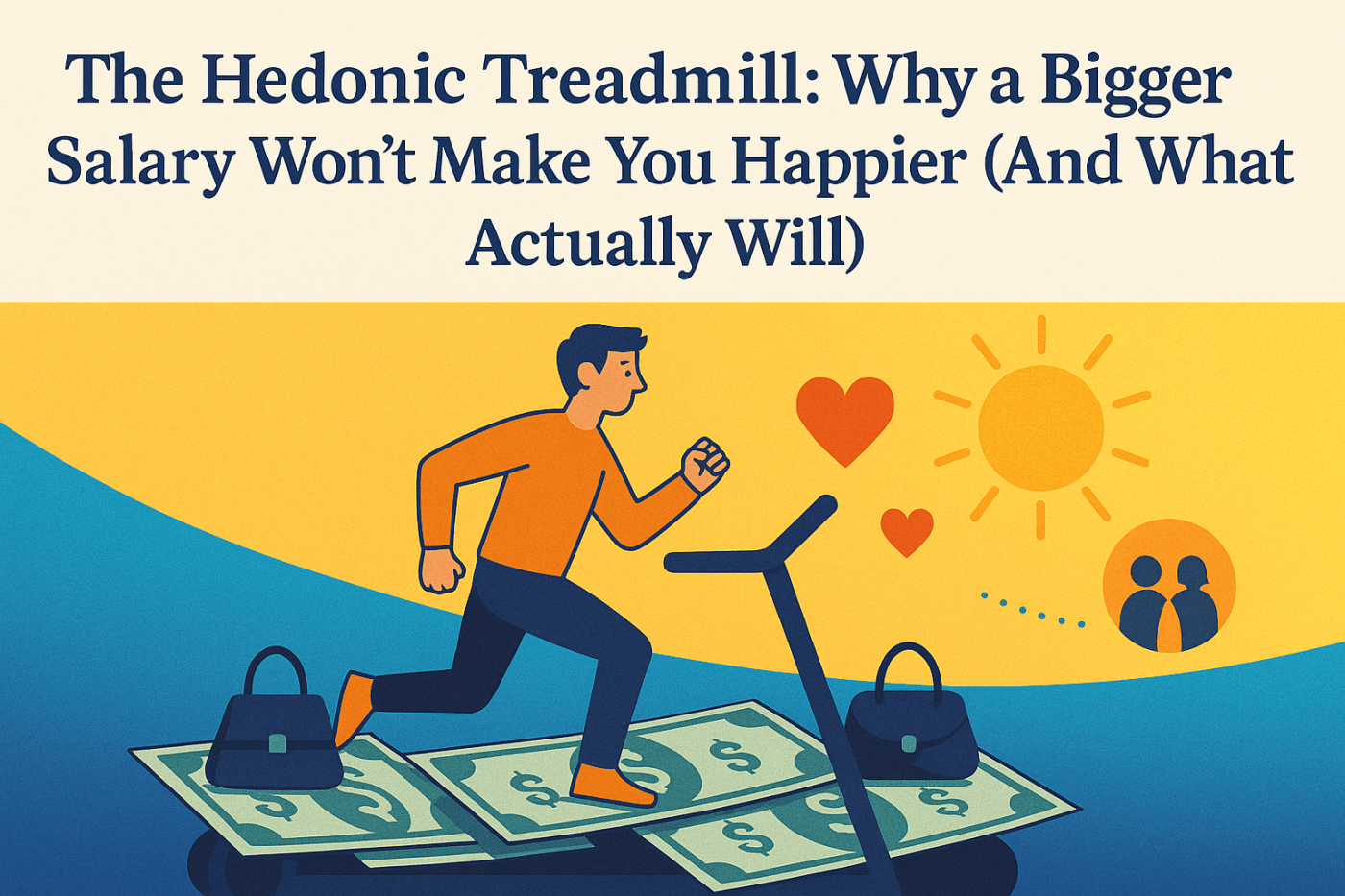
In our modern society, it’s almost a given that more money equals more happiness. You get a raise, a promotion, a bonus—surely life just got better, right? But have you ever noticed how quickly the thrill fades? That new car becomes just your car. The bigger apartment? Just your home. Welcome to the Hedonic Treadmill—a psychological phenomenon that explains why your happiness always seems just out of reach.
In this blog, lets discuss what the Hedonic Treadmill is, why more money doesn’t equate to lasting happiness, and—most importantly—what actually does.
What Is the Hedonic Treadmill?
The term Hedonic Treadmill (also called hedonic adaptation) refers to our mind’s tendency to return to a baseline level of happiness, regardless of positive or negative life changes. Coined by psychologists Brickman and Campbell in 1971, this concept shows that humans are remarkably good at adapting to new circumstances.
Real-Life Examples:
You win the lottery—at first, euphoria. A year later, your happiness levels are back where they started.
You get a dream job—initially thrilling. Months later, it’s just another workday.
You move to a luxury home—exciting at first. Soon enough, you’re eyeing a bigger one.
No matter how significant the life upgrade, we psychologically adjust, and our happiness reverts to a personal “set point.”
Why a Bigger Salary Doesn’t Guarantee Happiness?
While money certainly reduces financial stress and can improve life satisfaction to a point, it stops having a significant impact after your basic needs are met. Here’s why a bigger paycheck often falls flat emotionally:
1. Lifestyle Inflation
As income rises, so do your expenses. You trade up—homes, cars, gadgets—resetting your “normal” and perpetuating the treadmill.
2. Social Comparison
The more you earn, the more you compare. If your peer group also climbs the ladder, you’re still in the same race—just with a higher entry fee.
3. Temporary Highs
The dopamine hit from material gains is short-lived. That excitement fades quickly, pushing you to chase the next upgrade.
4. Neglected Intrinsic Needs
Money doesn’t buy meaningful relationships, purpose, or personal growth—all crucial ingredients for long-term happiness.
What Does Lead to Lasting Happiness?
If salary hikes and shiny things don’t cut it, what actually moves the needle on your well-being? Research offers some compelling answers:
1. Strong Relationships
Harvard’s 85-year study on adult development found that quality relationships are the strongest predictor of happiness and longevity—not wealth or fame.
2. Purpose and Meaning
Doing work that aligns with your values, helps others, or leaves a legacy gives your life a deeper dimension than just clocking in for a paycheck.
3. Gratitude Practice
Regularly reflecting on what you already have (instead of what’s missing) rewires the brain for positivity and contentment.
4. Mindfulness and Presence
Living in the moment, rather than mentally fast-forwarding to the next goal, brings peace and appreciation for the now.
5. Personal Growth
Investing in skills, creativity, or experiences provides a sense of progress that material upgrades can’t match.
6. Generosity
Helping others—whether through time, kindness, or money—creates a feedback loop of joy, connection, and self-worth.
How to Step Off the Hedonic Treadmill?
You don’t have to opt out of ambition to escape the treadmill—you just need to run smarter. Here’s how:
Set non-monetary goals: Aim for things like learning a language, building deeper friendships, or improving mental health.
Celebrate small wins: Don’t reserve happiness only for major milestones.
Practice “enough” thinking: Define what a good life means to you, not society.
Track moments, not money: Keep a journal of meaningful experiences, not just bank balances.
Avoid lifestyle creep: Just because you can afford more doesn’t mean it will make you happier.
Final Thoughts: Redefining Success
The Hedonic Treadmill isn’t a sentence—it’s a wake-up call. It reminds us that external achievements, while valuable, can never fully satisfy our inner longing for meaning, connection, and joy.
So next time you chase a bigger salary or a flashier lifestyle, ask yourself: What am I really hoping to feel? Then go chase that—you might just find it’s closer (and cheaper) than you think.

If you found this article valuable, please don’t forget to Like and Subscribe to my blog for more expert insights and updates.

 THE MIND UPGRADE
Leave a comment