14th July 2025, Gaurav Kumar Singh
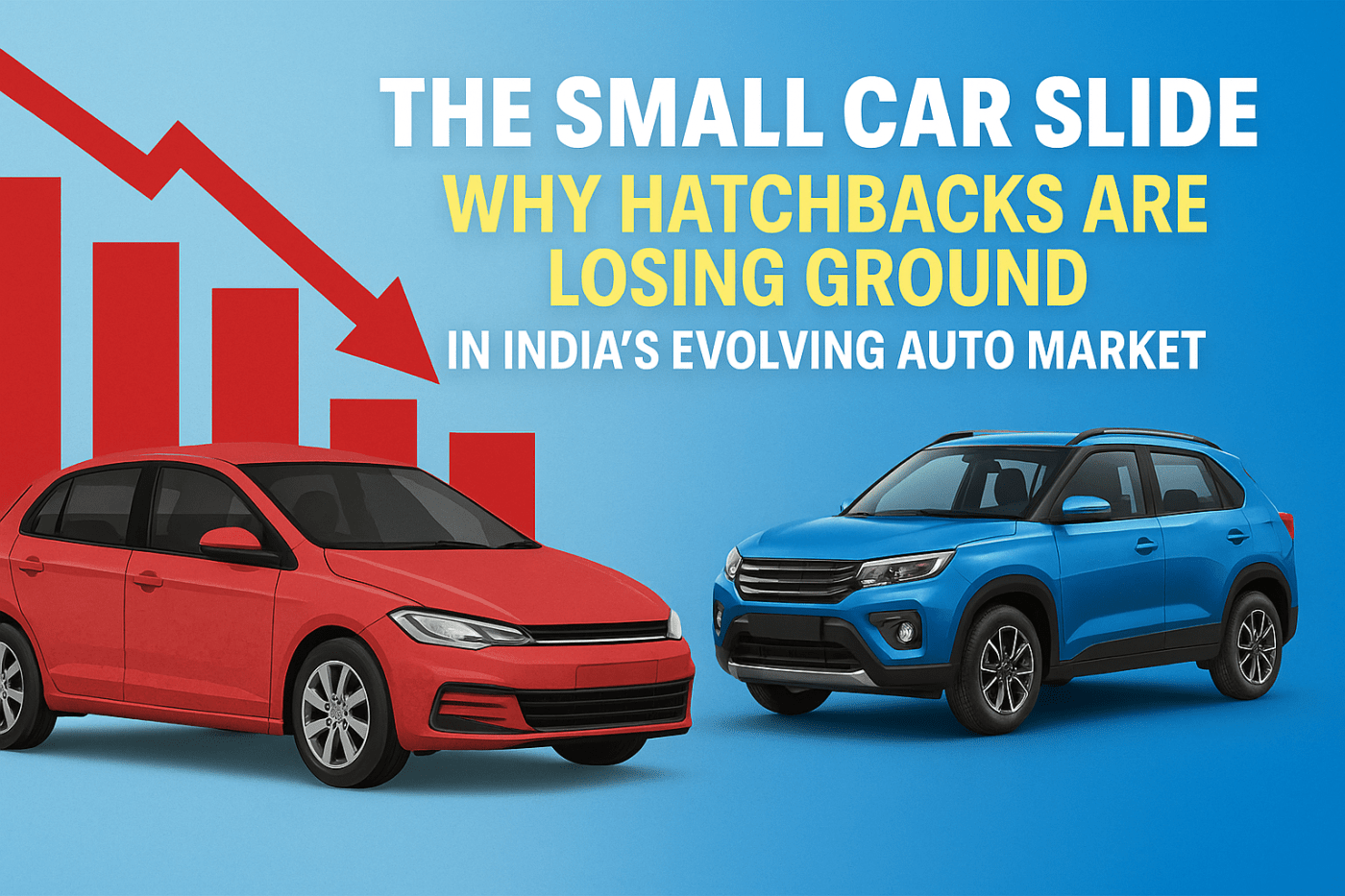
The small car — once the pride of India’s burgeoning middle class — is fast disappearing from Indian roads. Affordable, compact, and easy to maintain, hatchbacks used to dominate India’s car landscape. But in just a few years, a seismic shift in consumer preferences, rising regulatory burdens, and economic pressures have driven the segment into a steep decline.
In this blog, we explore the reasons behind this dramatic transformation. Whether you’re a consumer, auto enthusiast, or policy watcher, this is a crucial read to understand what’s changing in India’s auto sector and why.
From Dominance to Decline: The Numbers Tell the Story
Between 2020 and 2024, hatchbacks’ market share fell dramatically from 47% to just 24%, while SUVs surged from 29% to 54%. Sales volumes reflect the same trend:
SUV sales: Climbed from 717,000 units in 2020 to 2.34 million in 2024
Hatchback sales: Peaked at 1.33 million in 2022, then plummeted to 1.04 million by 2024
MPVs: Rose from 288,000 in 2020 to 586,000 in 2024
Sedans: Remained relatively stable but unremarkable
Even industry giants have been hit hard:
Maruti Suzuki: Hatchback sales dropped from 771,000 (2020) to 731,000 (2024)
Hyundai: Fell from 192,000 to 124,000 units over the same period
Tata & Toyota: Also saw consistent dips
This sharp decline is more than just a market blip. It signals a broader transformation in India’s auto ecosystem.
Why Small Car Sales Are Falling: 6 Key Reasons?
1. Higher Compliance Costs
The government’s mandate for six airbags, ABS, and other safety features in all cars has significantly raised prices of entry-level models. While good for safety, it strains buyers with tight budgets. As R.C. Bhargava, Chairman of Maruti Suzuki, points out, these costs hurt the affordability of small cars more than any other segment.
2. Mandatory 3-Year Insurance
New rules require buyers to pay three years of third-party insurance upfront. This alone can inflate the initial cost by up to ₹60,000 — a major burden for budget-conscious buyers.
3. High Road Tax and GST
In cities like Mumbai, buyers face:
Up to 11% road tax 18% GST on small cars under 1,200cc Extra charges for petrol, diesel, and CNG variants
Together, these can raise the on-road cost by 10% or more, making small cars less financially appealing.
4. The SUV Boom
Compact SUVs like the Tata Nexon, Maruti Brezza, and Hyundai Venue have redefined consumer aspirations. Priced below ₹10 lakh, they offer better road presence, higher seating, improved safety features, and style — everything a modern buyer craves.
5. Used Car Market Growth
Used vehicles, especially 5–6-year-old models, offer better safety, newer tech, and solid build quality — often at the same or lower price than a new small car. In 2024, used car sales (5.4 million) outpaced new car sales (4.2 million) in India.
6. Changing Aspirations
Today’s buyers, backed by rising incomes and easier credit, want more comfort, features, and space. It’s easier for automakers to make money on a well-equipped mid-size SUV than on a barebones hatchback.
What This Means for Automakers and Policymakers?
A Warning Bell for Carmakers
The small car segment once served as the critical entry point for India’s vast two-wheeler population to transition to four-wheelers. Now, that transition is faltering. In 2024, hatchbacks made up just 40% of Maruti Suzuki’s sales, down from a majority earlier in the decade.
Without policy support or incentives, automakers fear that small cars may soon become obsolete.
Policy Suggestions
Reduce GST on small cars
Make road tax an annual payment instead of a lump sum
Spread insurance payments over multiple years
These steps could reduce the initial purchase cost by up to 10%, reigniting demand for small cars.
What’s Next for the Indian Auto Market?
India still lags behind in car ownership — with just 34 cars per 1,000 people, compared to 860 in the U.S. and 612 in Japan. If the government and automakers work together to bring affordability back to the table, small cars could reclaim their relevance.
But for now, the era of the hatchback is fading, replaced by the rise of compact SUVs, evolving buyer preferences, and a booming second-hand market.
Conclusion
The fall of the small car in India isn’t just about numbers — it’s about affordability, policy, consumer aspirations, and economic realities. Unless swift action is taken, the hatchback may soon be a relic of India’s automotive past.

If you found this article valuable, please don’t forget to Like and Subscribe to my blog for more expert insights and updates.

 THE MIND UPGRADE
Leave a comment