22nd May 2025, Gaurav Kumar Singh
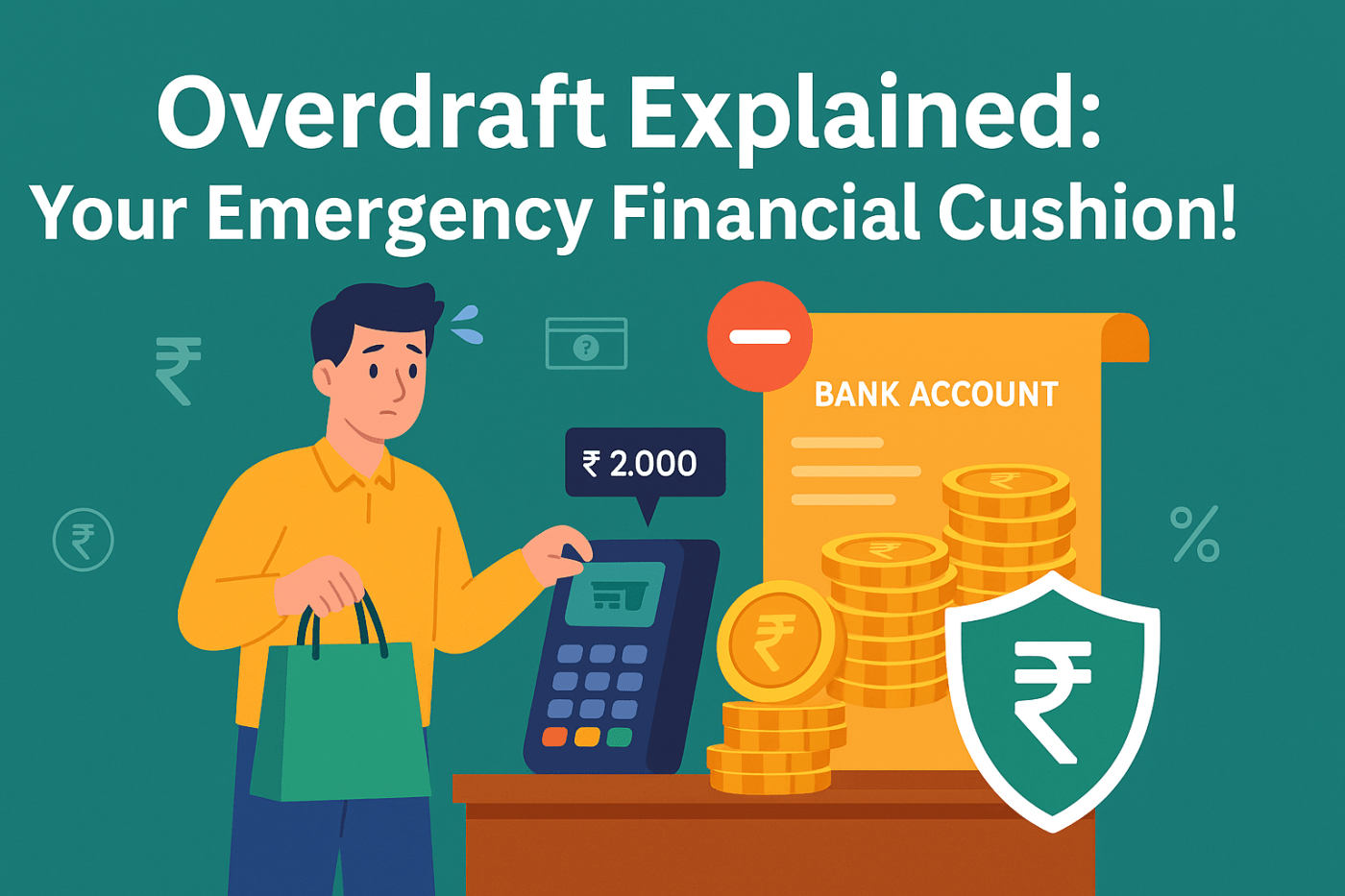
Imagine standing at the billing counter with a must-have purchase in hand, only to realize your bank account is short by ₹5,000. Awkward, right?
That’s when an overdraft facility can save the day. It acts as a financial cushion, letting you withdraw more money than you currently have in your bank account—up to a pre-approved limit.
In this blog, let’s explore what an overdraft is, how it works, its different types, and whether it’s the right option for your financial needs.
What Is an Overdraft?
An overdraft is a short-term credit facility provided by banks, allowing account holders to withdraw more money than what is available in their account balance. Think of it as a temporary loan or credit line linked to your savings or current account.
Example: Suppose your account has ₹2,000, but you urgently need ₹10,000. If you have an overdraft limit of ₹10,000 approved by your bank, you can still make the payment. You’ll only be charged interest on the extra ₹8,000 used—not the entire overdraft limit.
Types of Overdrafts
Overdrafts generally fall into two categories: authorised (secured) and unauthorised (unsecured).
1. Authorised (Secured) Overdraft
This is a pre-approved facility offered by the bank based on an agreement with the customer. It’s usually granted against collateral or a good banking history.
Common securities include:
Fixed deposits (FDs)
Life insurance policies
Mutual funds or shares
Salary accounts (for salaried professionals)
Example: If you have an FD of ₹1 lakh, your bank might offer an overdraft of up to ₹90,000 against it.
2. Unauthorised (Unsecured) Overdraft
This occurs when you withdraw more money than your balance without prior approval from the bank. It’s risky and often attracts:
High interest rates
Penalties
Negative impact on your credit score
Important: Always avoid unauthorised overdrafts unless absolutely necessary.
Key Features of an Overdraft
Understanding how overdrafts work can help you use them more wisely. Here are the main features:
Interest Is Charged Only on the Amount Used
If your overdraft limit is ₹2 lakh but you use only ₹50,000, interest is charged only on that ₹50,000—not the full limit.
Quick and Easy Access to Funds
Especially for authorised overdrafts, the approval process can be fast, often requiring minimal documentation.
Based on Your Credit Profile
Your CIBIL score, account history, income, and relationship with the bank determine the limit you’re offered.
Short-Term Credit Solution
Most overdrafts are available for a few weeks to a year, and are meant to cover temporary cash flow gaps, not long-term borrowing.
Should You Use an Overdraft?
Let’s break it down with the pros and cons so you can decide if it’s the right fit for you:
Pros:
Perfect for Emergencies: Covers urgent expenses like medical bills, last-minute travel, or home repairs.
No Need for Separate Loan Applications: The money is already available in your account.
Flexible Usage: Withdraw only what you need and repay at your convenience (within the allowed tenure).
Cons:
High Interest Rates: Often higher than personal loans. Also, interest is calculated daily, which can add up quickly.
Limited Duration: Overdrafts are short-term by design and not suitable for big or long-term financial goals.
Tied to Your Bank Account: You can only get an overdraft from a bank where you already have an active account.
Pro Tip: If your account is held jointly, both account holders are legally responsible for repaying the overdraft.
When Should You Consider an Overdraft?
Overdrafts are best suited for:
Salaried individuals who need a cash buffer before payday
Small business owners managing cash flow between client payments
Anyone facing a temporary financial crunch and seeking instant funds
However, they should not be used for:
Long-term borrowing
Discretionary spending (shopping, vacations, etc.)
Habitual overdraws, which could signal poor money management
Final Thoughts
An overdraft is a handy financial backup—not a license to overspend. It can provide much-needed breathing room in emergencies, but it’s important to understand the interest charges and repayment terms.
Used responsibly, an overdraft can be a powerful tool in your financial toolkit. So, the next time your account balance falls short, and you have an approved overdraft facility—you’ll know exactly what to do.
Need more personal finance tips like this?
Subscribe to my blog and stay ahead of your financial game!

If you found this article valuable, please don’t forget to Like and Subscribe to my blog for more expert insights and updates.

 THE MIND UPGRADE
Leave a comment