17th May 2025, Gaurav Kumar Singh
In today’s digital age, social media has become as essential to the younger generation as food and water. Platforms like Instagram, Facebook, Snapchat, TikTok, and YouTube are no longer just tools for entertainment or communication—they’ve become a way of life. However, behind the glossy filters and trending reels lies a growing concern: social media addiction.
This is not just a buzzword anymore. In urban and even semi-urban parts of India, young people, especially teenagers and those in their early twenties, are increasingly hooked on social media. The lines between the virtual and real world are blurring, and the consequences are more serious than they appear.
What is Social Media Addiction?
Social media addiction refers to a compulsive and excessive use of social networking platforms, to the extent that it begins to interfere with a person’s daily life, responsibilities, mental health, and interpersonal relationships.
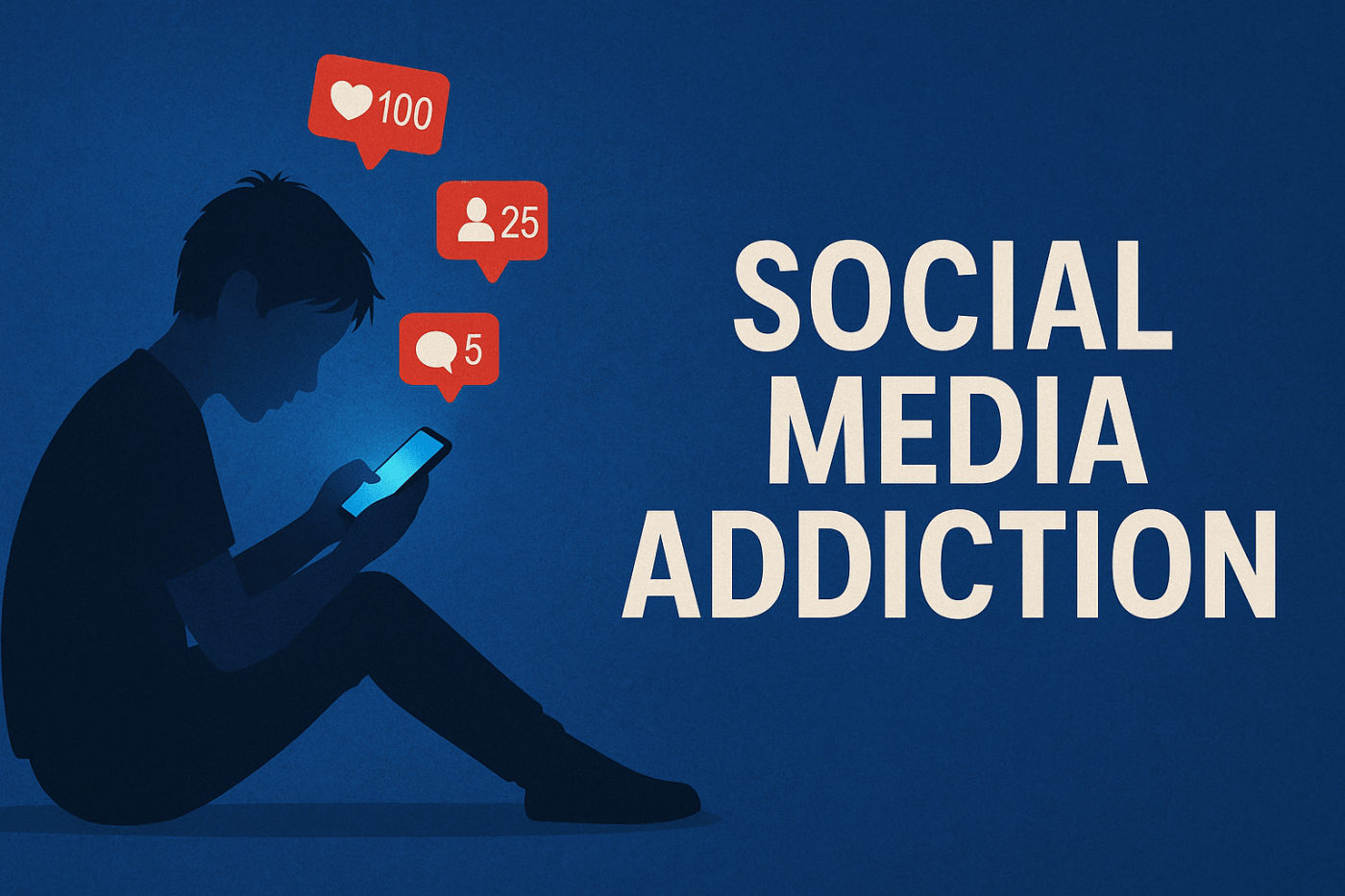
It’s not about just spending a few hours a day online. It’s when checking notifications becomes the first thing you do in the morning and the last thing before bed. It’s when your mood depends on how many likes you get or how your stories perform.
The Indian Context: Why Are Young Indians So Vulnerable?
India is home to the world’s largest youth population, and with cheap internet and smartphones, social media is accessible to nearly everyone.
According to recent studies, Indian teenagers spend an average of 3–4 hours daily on platforms like Instagram, Snapchat, and YouTube.
Several factors contribute to this growing addiction:
Peer pressure to stay updated and popular.
Fear of Missing Out (FOMO) on trends, memes, and online discussions.
Validation cravings through likes, shares, and followers.
Escape from reality—using social media to avoid academic stress, personal problems, or boredom.
Easy access to smartphones, cheap data plans, and 24×7 internet connectivity.
Signs of Social Media Addiction
If you’re wondering whether someone is addicted to social media, here are some red flags:
Checking social media first thing in the morning.
Feeling anxious or irritable when unable to access social media.
Spending excessive hours online, losing track of time.
Neglecting studies, chores, or sleep due to scrolling.
Constantly thinking about what to post next or how a post is performing.
Comparing oneself to others online and feeling inadequate.
The Impact: More Harmful Than We Think
1. Mental Health Issues
Increased levels of anxiety, depression, and low self-esteem.
Over-dependence on external validation can lead to identity issues.
Cyberbullying and online trolling affect emotional wellbeing.
2. Academic Performance
Reduced concentration and poor academic outcomes.
Procrastination due to endless scrolling.
Decline in reading habits and critical thinking skills.
3. Sleep Disorders
Blue light exposure affects melatonin production, disturbing sleep cycles.
Many teens suffer from insomnia due to late-night screen use.
4. Physical Health Problems
Eye strain, headaches, and posture issues due to long screen time.
Reduced physical activity, leading to obesity or lethargy.
5. Social Disconnection
Ironically, social media makes users less social in real life.
Real-world relationships suffer as users spend more time online than with friends or family.
Case Studies & Real-Life Examples
Riya, 16, from Delhi, began skipping meals and lost touch with her hobbies due to her obsession with gaining Instagram followers. Her parents only realized the problem when her grades fell drastically, and she started showing signs of anxiety.
Aarav, 19, from Pune, suffered from low self-esteem after constantly comparing himself to influencers on YouTube and Instagram. He began believing his life was worthless because it didn’t match the “perfect” online lives he saw.
These are just two of countless stories. The problem is growing silently.
How Can We Fight This Epidemic?
1. Digital Detox
Take regular breaks from social media.
Set daily screen time limits using apps like Digital Wellbeing (Android) or Screen Time (iOS).
2. Encourage Offline Activities
Promote reading, outdoor sports, art, music, and hobbies.
Spend time with friends and family in person.
3. Mindful Social Media Use
Follow positive, educational content instead of superficial or toxic influencers.
Be aware of what you post and why—don’t chase validation.
4. Parental Guidance
Parents must lead by example—reduce their own screen time.
Open conversations about the dangers of overuse.
Use parental control tools where necessary.
5. Counselling & Support
Seek professional help if addiction seems out of control.
Schools and colleges should offer mental health counselling and awareness programs.
Conclusion: It’s Time to Log Out and Look Inward
Social media can be a great tool—but like any powerful tool, it must be used wisely. The youth of India are at a crossroads where digital dependence can either empower them or enslave them. It’s up to us—parents, educators, and even content creators—to build awareness and promote a balanced digital life.
Let’s encourage the young minds of India to unplug, step outside, and truly live—not just through their screens, but through real connections and experiences.
Final Call to Action
Are you or someone you know spending too much time on social media? Start small—put your phone away during meals, take a one-day break each week, or try journaling instead of scrolling. Share this blog to spread awareness and be part of the movement towards a healthier digital lifestyle.

If you found this article valuable, please don’t forget to Like and Subscribe to my blog for more expert insights and updates.

 THE MIND UPGRADE
Leave a comment