15th May 2025, Gaurav Kumar Singh
When you think of Lijjat Papad, the first thing that may come to mind is the crisp, flavourful disc that completes your Indian meal. But behind every bite lies a tale of resilience, unity, and economic empowerment. The Lijjat Papad story is not just about food—it’s about transforming lives.
This is the inspiring success story of Shri Mahila Griha Udyog Lijjat Papad, a cooperative founded by seven determined women in 1959. Their vision wasn’t just to start a business, but to create a platform where women could become financially independent while preserving dignity and self-respect. Today, Lijjat Papad is a globally recognised brand, with an annual turnover of over ₹1,600 crore, run entirely by women.
The Humble Beginnings in a Mumbai Rooftop
In the post-independence era of India, women had very limited opportunities for work outside the home. In such times, seven Gujarati housewives from Mumbai decided to take control of their destiny. With a borrowed capital of just ₹80, they started rolling papads on a terrace in Girgaum, Mumbai.
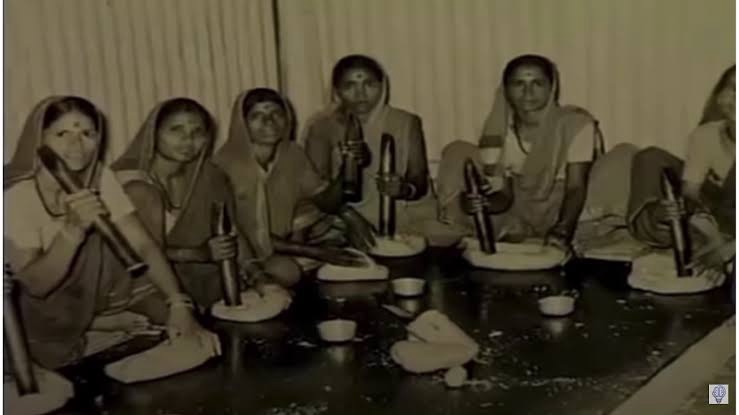
Their goal was simple: to contribute to their household income without compromising traditional values. What they didn’t realise at the time was that they were laying the foundation of one of India’s most successful women-run cooperatives.
The Power of the Cooperative Model
From the beginning, the founders decided that Lijjat would not be a charity or a welfare organization, but a true business enterprise owned and operated by its members. Every woman who joined became a part-owner, sharing both profits and responsibilities.
This cooperative model ensured:
Equal say in decisions
Shared profits
Democratic functioning
No external shareholders
The model was so successful that it soon started attracting hundreds of women, and the brand began to grow by word of mouth.
Branding and Identity: A Rabbit Named ‘Karram Kurram’
The brand Lijjat soon became a household name, not just for the taste of its papads, but also for its unique identity. The famous white rabbit mascot named “Karram Kurram”, introduced in its radio ads, captured the attention of Indian audiences. The catchy jingle “Lijjat Papad” became a part of pop culture.
Despite the brand’s popularity, the organization never compromised on its core values—quality, honesty, and empowerment.
Expanding the Product Range
While Lijjat Papad started with just papads, it gradually diversified into:
Spices (masalas)
Wheat flour (atta)
Detergents
Bakery items

Even as the product range grew, the focus remained on producing high-quality goods through manual, decentralized production methods, involving women from across the country.
Empowering Over 45,000 Women Across India
Today, Lijjat has more than 45,000 women members spread across 82 branches in India. Every woman involved, whether rolling papads or managing logistics, is treated as an equal stakeholder.
The cooperative provides:
Regular income
Financial independence
Training and skill development
A platform for community bonding
What makes it even more admirable is that Lijjat has never taken donations or government grants—it has grown entirely on internal revenues.
Business Model That’s Built to Last
Here are a few key reasons why the Lijjat model works:
No Hierarchy: Every woman is both a worker and an owner.
Decentralized Production: Local units operate independently while following central quality norms.
Focus on Quality: A dedicated team ensures that each papad meets high standards.
Profit Sharing: Annual profits are equally distributed among members.
No Advertising Agencies: Lijjat relied on radio, word-of-mouth, and strong brand loyalty.
This grassroots approach has created a sustainable, scalable, and socially responsible enterprise.
Recognition and Awards
Lijjat Papad’s success story has been recognized nationally and globally. Some notable recognitions include:
Best Village Industries Institution Award from Khadi and Village Industries Commission (KVIC)
Businesswomen of the Year Award by Economic Times (collectively for the members)
Featured in management books and business school case studies, including Harvard
Lessons from Lijjat Papad’s Success
Empowerment through employment can bring real social change.
A business doesn’t need to chase profits to be successful—purpose and values can lead the way.
Even with no formal business training, women can run a world-class enterprise if given the opportunity.
Cooperative models can be both profitable and inclusive.
Conclusion
Lijjat Papad is more than a business—it’s a movement. It’s a beacon of how ordinary women, with limited resources but unlimited determination, can create something extraordinary.
In today’s startup world, where innovation is often associated with technology, Lijjat reminds us that social innovation—rooted in empathy, dignity, and cooperation—can be equally powerful.
As we bite into a crisp Lijjat Papad, let’s celebrate the hands that made it—and the spirit that built a legacy.

If you found this article valuable, please don’t forget to Like and Subscribe to my blog for more expert insights and updates.

 THE MIND UPGRADE
Leave a comment