13th May 2025, Gaurav Kumar Singh
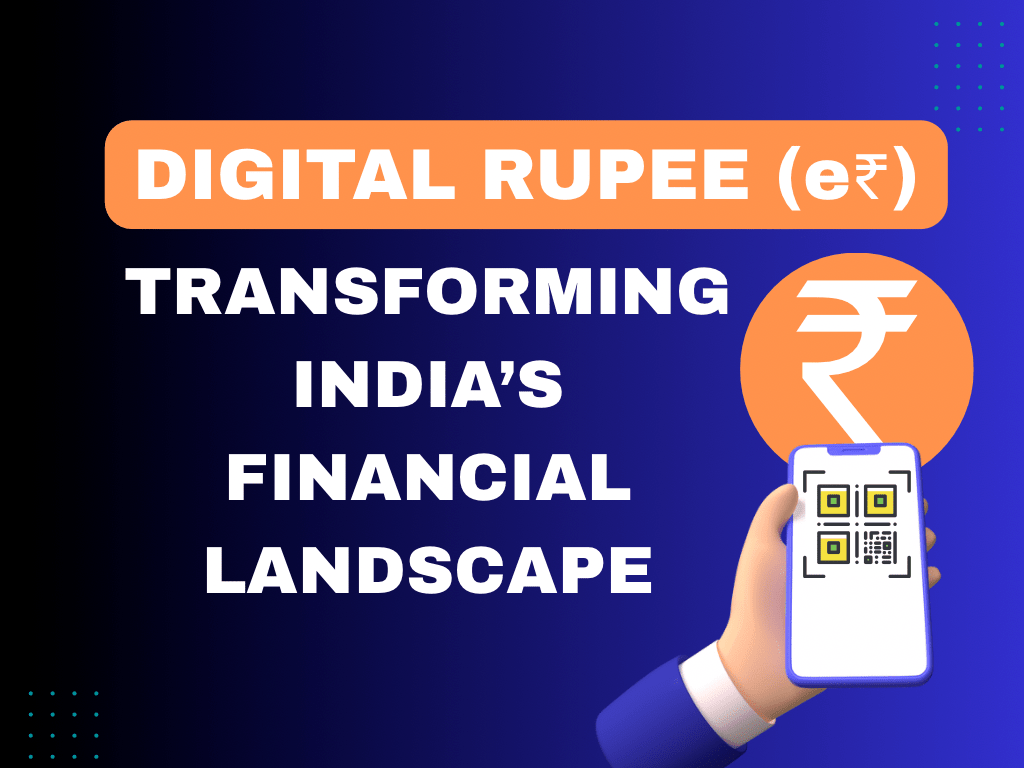
India is moving towards a big change in the way we use money. This change is called the Digital Rupee, or e₹. It’s a new kind of money introduced by the Reserve Bank of India (RBI) that works completely online.
You don’t need to carry cash or even swipe your card. With the Digital Rupee, you can pay using your phone—quickly, safely, and without any middleman.
So, what exactly is the Digital Rupee?
Think of it as the same ₹100 or ₹500 note you use, but in digital form. It’s not like Google Pay or Paytm where the money comes from your bank account.
The Digital Rupee is money itself—just like a real note, but saved in your mobile wallet. And because it is issued by the RBI, it’s as safe as using regular cash.
Now you might wonder, “We already have UPI, so why do we need a Digital Rupee?”
That’s a great question. UPI is a system that helps send money from one bank to another. But with the Digital Rupee, there is no need for a bank in the middle. You can send and receive money directly—just like handing over a cash note to someone, but digitally.
Using the e₹ is simple. Suppose you go to a shop, buy something, and want to pay. Instead of taking out cash or using a debit card, you can just scan a QR code and pay through your Digital Rupee wallet. The money goes from your phone to the shopkeeper’s phone instantly.
This makes life easier for everyone. For normal people, there’s no need to carry cash. For shopkeepers and small businesses, they get their money faster without paying extra charges. And for the government, it helps track how money flows in the economy and reduces black money and tax evasion.
The RBI has already started testing the Digital Rupee in some cities. Banks like SBI, HDFC, and ICICI are part of the trials. People who have used it say the payments are fast, smooth, and easy.
How Does Digital Rupee Work?
Let’s understand this step by step:
1. Issuance by RBI
The RBI creates digital currency just like it prints paper notes.
This digital currency is stored safely in RBI’s systems and then given to banks, just like cash is.
2. Banks Distribute It to People
Selected banks like SBI, HDFC, ICICI, etc., help people get the e₹.
You can download a special wallet app (provided by the bank or RBI) where your digital rupees will be stored.
3. You Use the e₹ Just Like Cash
Let’s say you have ₹500 in your e₹ wallet.
You can go to a shop, scan their QR code, and send money directly to their e₹ wallet.
The money goes from your wallet to theirs instantly—just like handing over a ₹500 note.
4. No Middleman
Unlike UPI or card payments, where banks are involved to move the money, in Digital Rupee, there’s no need for a bank in between. The transaction happens wallet to wallet, just like cash changing hands.
5. Offline Capability (Coming Soon)
In the future, the RBI also plans to allow offline payments using e₹—meaning even without internet, two people can exchange money if their phones can connect via Bluetooth or NFC.
How Is It Stored?
The e₹ is stored in a Digital Wallet on your mobile phone—like a secure app.
You can see your balance, make payments, and receive money—just like using a UPI app, but instead of bank money, it’s actual digital currency from RBI.
How Is It Safe?
The RBI controls and tracks how e₹ is created and circulated, so it’s safe and trustworthy.
Wallet apps are protected with PINs, biometrics, and encryption to keep your money secure.
Since the e₹ is official currency, if something goes wrong (like fraud or a failed transaction), RBI and your bank can step in to help.
Of course, there are still some challenges. Not everyone in India has a smartphone or internet access. Some people also don’t fully understand how digital payments work. But these are problems the government and banks are working to solve. With time, more people will learn and be able to use the Digital Rupee easily.
The Digital Rupee is a big step toward a cashless India. It supports the dream of a Digital India, where everyone—rich or poor, in cities or villages—can use modern technology for everyday payments.
In the future, we may not need to carry wallets at all. Our phones could hold all our money safely and securely. The Digital Rupee isn’t just a new way to pay—it’s a sign that India is ready for the future.
The way we use money is changing fast. And with the Digital Rupee, India is leading the way.

If you found this article valuable, please don’t forget to Like and Subscribe to my blog for more expert insights and updates.

 THE MIND UPGRADE
Leave a comment