12th May 2025, Gaurav Kumar Singh
Introduction
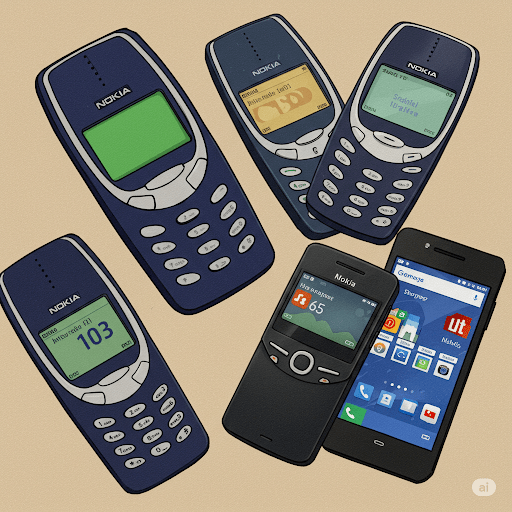
Once a giant in the mobile phone industry, Nokia was a household name in the early 2000s. Known for its durable phones and iconic models like the Nokia 1100 and Nokia 3310, the company was at the pinnacle of success.
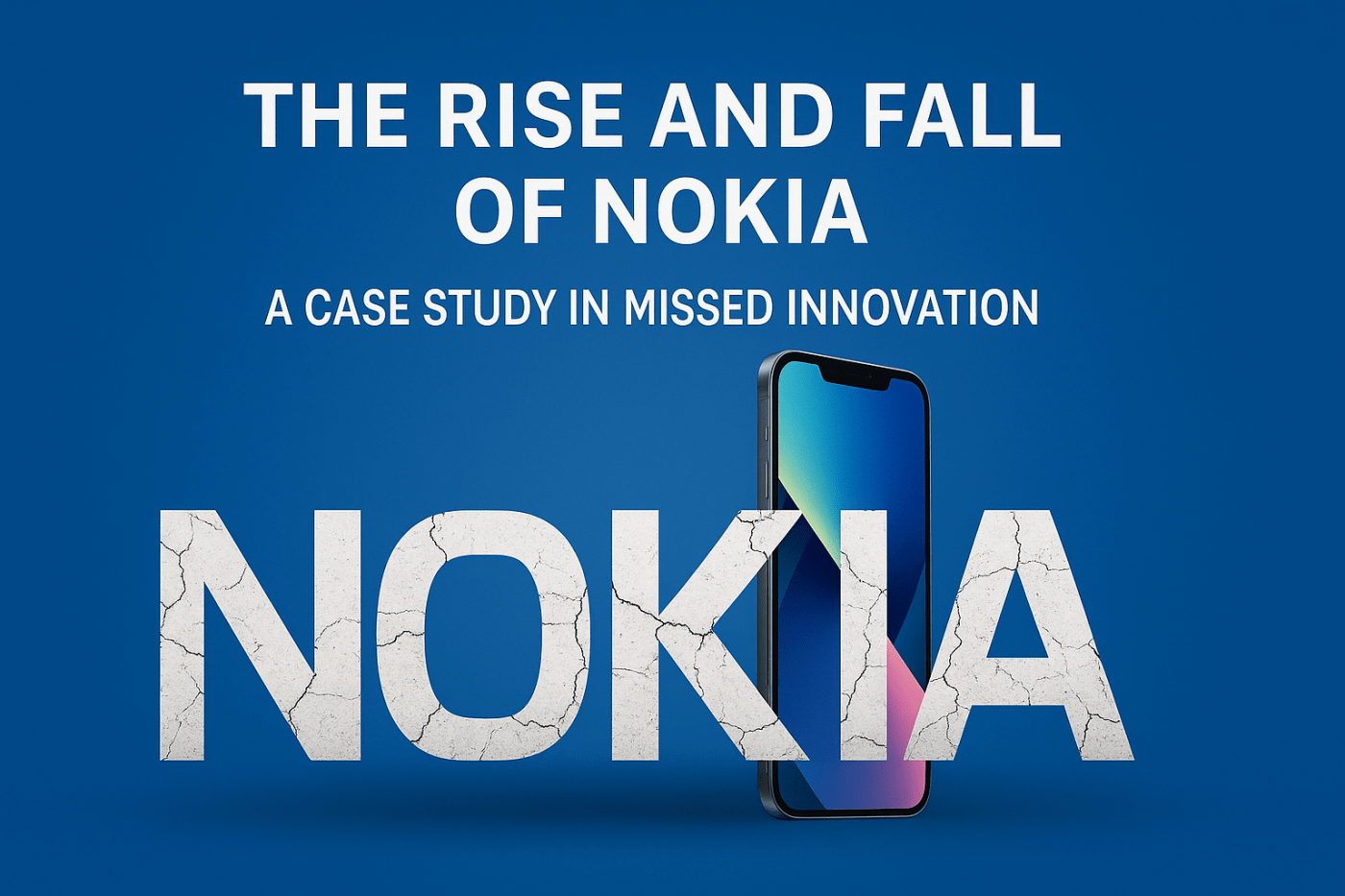
However, in less than a decade, Nokia lost its dominance and became a case study in how missing out on innovation and failing to adapt to change can bring down even the mightiest.

In this blog, let’s explore Nokia’s rise to fame, the strategic mistakes that led to its fall, and the valuable lessons that entrepreneurs, business leaders, and innovators can learn from its story.
The Rise of Nokia: From Paper Mill to Tech Giant
Humble Beginnings
Nokia began its journey in 1865 as a paper manufacturing company in Finland. Over the decades, it diversified into rubber, cables, and electronics. By the 1980s, it had started making moves into the telecommunications industry.
Dominating the Mobile Phone Market
Nokia’s real breakthrough came in the 1990s, when it shifted its focus entirely to telecommunications. It launched mobile phones that were affordable, durable, and user-friendly—features that appealed to a broad audience across the globe.
Between 1998 and 2007, Nokia was the largest mobile phone manufacturer in the world. Its market share peaked at over 40%. Nokia phones became known for their long battery life, strong signal reception, and reliable hardware.
Key success factors:
Strong brand recognition
Global distribution network
Investment in R&D
Early mover advantage in mobile phones
Focus on emerging markets
Turning Point: The Rise of the Smartphone
In 2007, the mobile industry witnessed a seismic shift. Apple introduced the iPhone, and shortly after, Google launched Android. Smartphones were no longer a luxury—they became the new standard.
While the world moved toward touchscreens, apps, and mobile internet, Nokia remained committed to its traditional mobile phone designs and Symbian operating system.
The Fall of Nokia: Strategic Mistakes and Missed Opportunities
1. Failure to Embrace the Smartphone Revolution
Nokia underestimated the impact of iOS and Android. While Apple and Samsung were innovating with sleek designs, app stores, and user-friendly interfaces, Nokia stuck with its outdated Symbian OS, which lacked flexibility and developer support.
2. Inconsistent Software Strategy
Nokia’s software strategy was fragmented. It launched various platforms like:
Symbian
Maemo
MeeGo
None of these platforms gained significant traction. Developers were confused, and customers were frustrated.
3. Too Late to Partner with Android
Instead of adopting Android, which was gaining rapid popularity, Nokia chose to partner with Microsoft in 2011 and adopted Windows Phone OS. Unfortunately, Windows Phone failed to gain user base or app support. This decision further alienated Nokia from the smartphone market.
4. Poor Leadership Decisions
Internal power struggles, a slow decision-making culture, and resistance to change contributed to Nokia’s downfall. By the time the company realized the gravity of the situation, it was too late.
5. Loss of Consumer Trust
As competitors launched better smartphones with richer features, Nokia’s brand perception declined. Once seen as a leader, it was now perceived as outdated.
The Microsoft Acquisition: A Last Attempt to Stay Relevant
In 2013, Microsoft acquired Nokia’s mobile division for $7.2 billion, hoping to strengthen its position in the smartphone market. The deal failed to revive either company’s mobile ambitions. By 2016, Microsoft wrote off the acquisition and laid off thousands of employees.
The Comeback Attempt: Nokia’s New Role
Nokia didn’t disappear entirely. After selling its phone business, it refocused on telecom infrastructure and networking technologies, becoming a major player in 5G and network equipment.
In 2016, Nokia made a modest comeback to the smartphone market through a brand licensing agreement with HMD Global, a Finnish company. These new phones, running Android, cater mainly to budget and mid-range users.
Lessons from Nokia’s Fall
1. Adapt or Die
Innovation is not optional. If a company fails to adapt to changing market trends, customer needs, and technological advancements, it will be left behind.
2. Customer-Centric Thinking is Crucial
Nokia focused more on protecting its legacy systems than on understanding changing customer preferences. In contrast, Apple and Android focused on user experience.
3. Don’t Fear Disruption—Embrace It
Disruption is inevitable. Nokia had the technology and talent to compete, but its fear of cannibalizing existing products prevented it from innovating freely.
4. Clear Strategy and Vision Matter
Nokia’s fragmented software strategy showed a lack of clear direction. Companies need a focused roadmap, especially in fast-evolving industries.
Conclusion
The story of Nokia is both inspiring and cautionary. It rose from humble beginnings to become a global tech titan, only to lose its lead due to complacency, poor strategic choices, and failure to innovate. But its reinvention in the telecom space also shows that comebacks are possible when companies accept failure, learn from it, and reinvent themselves.
For business leaders and entrepreneurs, Nokia’s journey is a powerful reminder that innovation, agility, and customer focus are the cornerstones of long-term success.

If you found this article valuable, please don’t forget to Like and Subscribe to my blog for more expert insights and updates.

 THE MIND UPGRADE
Leave a comment