20th April 2025, Gaurav Kumar Singh
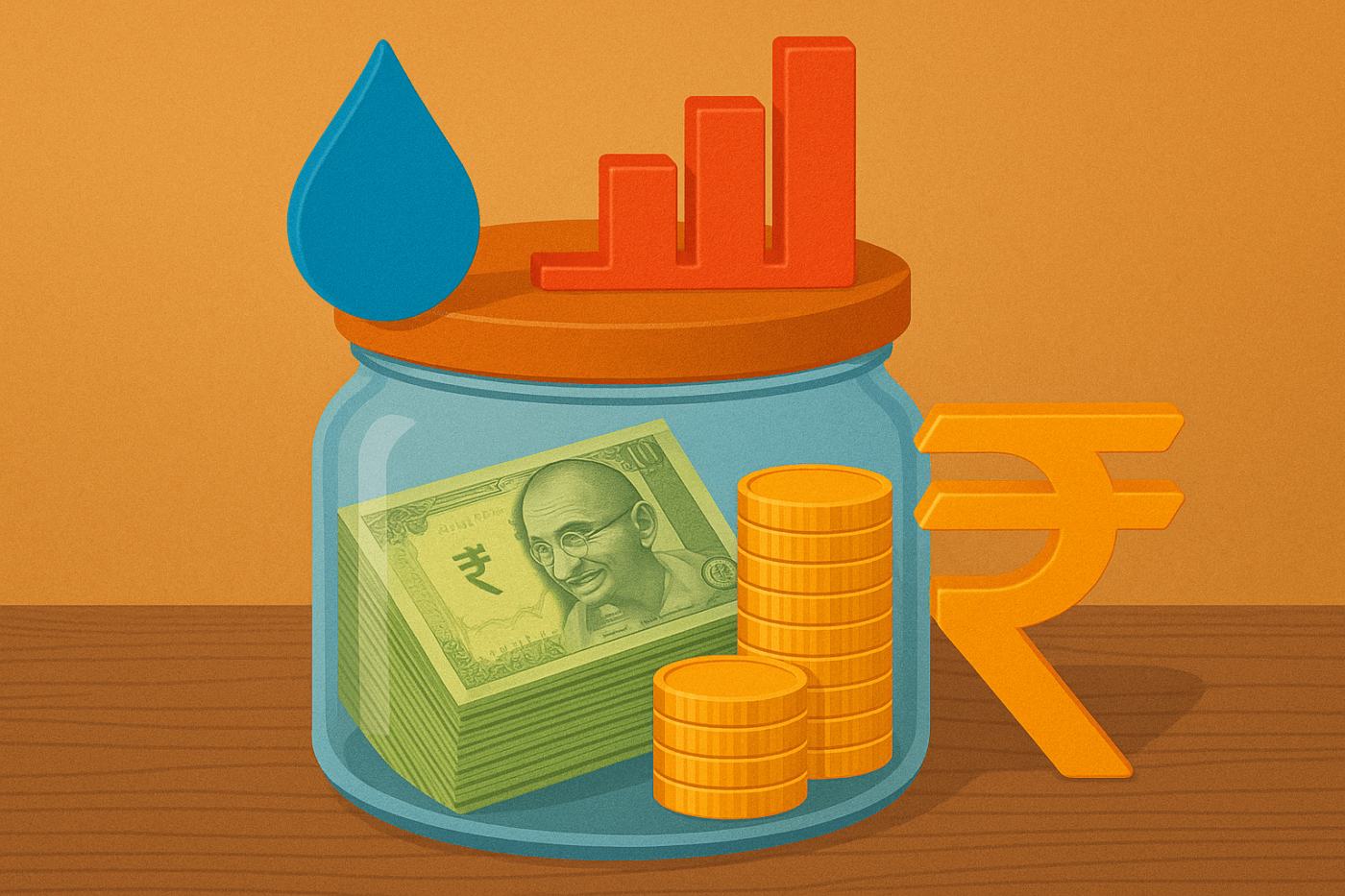
Imagine you run a lemonade stall. Every day, you keep aside some money in a safe box and only use the rest to buy lemons, sugar, and cups. Similarly, banks also have to keep a portion of their money aside, which is called the Cash Reserve Ratio (CRR).
Let’s break it down simply!
What is the Cash Reserve Ratio (CRR)?
CRR is the percentage of the total money that banks must keep with the Reserve Bank of India (RBI) as liquid cash.
- This money cannot be used for lending or investments.
- It’s a safety measure to make sure banks always have enough money to handle emergencies.

How it works:
- When the RBI increases CRR, banks have less money to lend. This can slow down borrowing and control inflation.
- When the RBI decreases CRR, banks have more money to lend, encouraging people and businesses to take loans and spend more.
In short, CRR helps the RBI manage how much money flows through the economy.
What Does Changing CRR Mean for the Economy?
- Higher CRR = Less Money in the Market
When CRR is high, there’s less money for people and businesses. It helps control inflation but can slow down economic growth.
2. Lower CRR = More Money in the Market
When CRR is low, banks have more cash to lend. It boosts economic activity but can also push up inflation if too much money flows around.
3. Balancing Act
The RBI has to carefully adjust CRR to balance economic growth and price stability, depending on what’s happening in the economy.

What Does It Mean for You and Me?
- Savings and Loan Rates
The CRR cut doesn’t immediately change your bank’s interest rates. But if the bank feels it has more money, it might:
1. Increase deposit interest rates (good news for savers!)
2. Lower loan interest rates (good news for borrowers!)
2. Loan Costs
Since banks get money more easily, borrowing costs for loans (especially loans linked to banks’ internal rates) might be reduced.
3. Access to Credit
Cheaper loans mean people can borrow more easily to buy homes, cars, start businesses, etc., helping the economy grow.
However, loans linked to external benchmark rates (like the RBI’s repo rate) might not see an immediate change.
Final Thoughts
The Cash Reserve Ratio (CRR) is a simple but powerful tool that the RBI uses to control the economy’s money supply.
The CRR cut is expected to ease liquidity pressure, help banks lend more, and boost economic activity.
In short, lower CRR means:
- More money in the banks
- Possibly better rates for savers and borrowers
- Hopes for stronger economic growth

If you found this article valuable, please don’t forget to Like and Subscribe to my blog for more expert insights and updates.

 THE MIND UPGRADE
Leave a comment